

Losing 50 to 100 hairs a day is normal, according to the American Academy of Dermatology (AAD). See a dermatologist if hair comes out suddenly or in patches, your part widens, your scalp itches or hurts, or heavy shedding lasts more than about six months. Here is how to tell shedding from hair loss, which habits break hair, and what helps, based on the AAD, Cleveland Clinic and the FDA.
Key takeaways
- The AAD calls 50 to 100 hairs a day normal shedding, not hair loss.
- Heavy shedding often starts a few months after childbirth, illness, surgery, a high fever, major stress or losing 20 pounds or more. It usually stops on its own (AAD).
- With true hair loss, hair won’t grow back until the cause stops (AAD).
- Tight styles, heat and chemical services damage hair so it breaks, and continued damage can lead to thinning or bald spots (AAD).
- Sudden or patchy loss, a widening part, or a painful, itchy or scaly scalp calls for a dermatologist.
How much hair shedding is normal?
The AAD says it’s normal to lose 50 to 100 hairs a day, because your body keeps growing new hair and shedding old hair. That shedding is not a sign of hair loss. Cleveland Clinic says most healthy people lose up to 100 strands a day, while people with telogen effluvium may lose up to 300.
Hair loss looks different. The AAD’s signs include a receding hairline, a bald spot, overall thinning, a widening part and a thinner ponytail.
Hair shedding vs hair loss: what’s the difference?
The AAD separates the two:
- Excessive shedding (telogen effluvium): the body sheds significantly more hairs than usual. It often stops on its own.
- Hair loss (anagen effluvium): something stops hair from growing, and it won’t grow back until the cause stops. Causes include heredity, an overactive immune system, some drugs and treatments, hairstyles that pull, harsh hair care products and compulsive hair pulling.
A dermatologist can tell which one you have, and some people have both (AAD).
What triggers heavy shedding?
The AAD lists losing 20 pounds or more, giving birth, a lot of stress, a high fever, an operation, an illness and stopping birth control pills. Cleveland Clinic adds severe infections, thyroid problems, fad diets low in protein and some medications. If you suspect a medicine, talk to your doctor before you stop it. The AAD warns that stopping some drugs suddenly can cause serious side effects.
How long does shedding last?
Cleveland Clinic says shedding from acute telogen effluvium tends to start two to three months after the trigger and usually lasts three to six months. After childbirth, the AAD says, shedding may start about two months after delivery and peak at about four. Once shedding stops, hair tends to regain its normal fullness within six to nine months (AAD). Ongoing stress can keep it going.
Is your hair care causing breakage?
Breakage is a different problem. The AAD says damaged hair is fragile and breaks easily, and that continued damage can eventually lead to thinning or bald spots.
Tight hairstyles and traction alopecia
Tight ponytails, buns, braids, cornrows, locs, weaves and extensions pull on hair. The AAD says that constant pulling can cause traction alopecia, which can become permanent. Change the style right away if you feel pain or stinging, or see crusts or “tenting,” where the scalp is pulled up like a tent. Watch for broken hairs around the forehead and a receding hairline.
The AAD suggests looser braids around the hairline and braids worn no longer than 6 to 8 weeks. Keep a weave or extensions in for 2 or 3 months at most, and choose sewn-in weaves over bonding glue.
Heat and chemical services
Coloring, perming and relaxing can damage hair, and the AAD says that over time the damage can lead to hair loss. Space out touch-ups (8 to 10 weeks or longer in winter) and have one service at a time. If you want two, perm or relax first and color 2 weeks later. With hot tools, use a low heat setting, keep contact short and use a heat protectant (AAD).
Compiled from AAD hair care and hair loss pages.
- Massage shampoo into your scalp, and let the rinse carry it through the lengths.
- Condition after every shampoo. A leave-in conditioner or detangler helps reduce breakage.
- Wrap wet hair in a towel instead of rubbing it, and air-dry when you can.
- Detangle gently with a wide-tooth comb: straight hair after it dries a bit, textured or tightly curled hair while damp.
- Brush only to style. The AAD calls 100 strokes a day a myth.
If your hair is already thinning, the AAD also suggests skipping hot-oil treatments and at-home color, perms and relaxers.
What helps thinning hair look fuller?
Shedding after childbirth needs no treatment, the AAD says, but these tips can help hair look fuller in the meantime:
- Use a volumizing shampoo. The AAD says many contain ingredients like protein that coat the hair.
- Skip “conditioning shampoos” and “intensive conditioners,” which weigh hair down. Use a conditioner for fine hair, mostly on the ends.
- Ask your stylist about a new cut. The AAD says some haircuts make hair look fuller, and Cleveland Clinic says shorter cuts can.
The AAD says hair loss shampoos can make hair look fuller or reduce breakage, but they can’t regrow hair or stop hair loss from getting worse.
The AAD also links too little iron, protein or calories to hair loss. It advises taking biotin, iron or zinc only if a blood test shows you’re low, since too much can be harmful. The FDA warns that biotin, common in supplements sold for hair, skin and nail growth, can cause falsely high or low results on some lab tests. Cleveland Clinic is more positive about iron and biotin, but both sources say to check with your doctor first.
For stylists: what to do when you notice thinning
The AAD says early hair loss can be subtle, so people may miss it for months or years. If you notice something at the chair, describe what you see and suggest a board-certified dermatologist instead of guessing the cause. Worth mentioning:
- a widening part, a thinner ponytail or a receding hairline;
- broken hairs at the forehead, or thinning where a style pulls;
- a round bald patch, or one at the center of the scalp. The AAD says a scarring type called CCCA often starts there and can’t be treated effectively with products sold online or in stores;
- redness, scaling or sores, or a scalp that itches, burns or hurts.
In California, salon services aren’t allowed on skin or scalp that is inflamed or broken, or that has an infection or eruption (16 CCR § 984(e)). For people who are losing hair, the AAD advises against at-home color, perms and relaxers. It suggests a salon that specializes in the service and knows how to examine the scalp.
When to see a dermatologist about hair loss
The AAD says it’s never too early to see a board-certified dermatologist about hair loss; treatment works best when started early. Go if you have:
- sudden loss, such as a bald patch that appears in a day or two, or hair coming out in clumps (AAD);
- patchy or round bald spots;
- burning, intense itching, tenderness, scaling, sores or pus on the scalp. The AAD links these to conditions such as infections, alopecia areata and psoriasis;
- gradual thinning, a widening part or a receding hairline;
- shedding that lasts more than six months. After childbirth, Cleveland Clinic says, this can point to another condition, such as iron deficiency or thyroid disease.
Expect questions, a close look at your scalp, hair and nails, and a gentle pull on your hair. Blood tests or a scalp biopsy may follow (AAD).
What hair loss treatments are available?
The right option depends on the cause.
- Minoxidil (Rogaine). The AAD says the FDA has approved nonprescription 2% and 5% minoxidil for female pattern hair loss, and calls it the most-recommended treatment for it. It can help early hair loss but can’t regrow a full head of hair. Results take about 6 to 12 months, shedding may rise for the first 2 to 8 weeks, and the benefit ends when you stop (AAD).
- Check the label. A women’s 5% minoxidil foam label says not to use it if your hair loss is sudden or patchy, is linked to childbirth or has no known cause. It also rules out use on a scalp that is red, irritated or painful. The AAD says to avoid minoxidil during pregnancy or breastfeeding.
- Prescription care. A dermatologist may discuss pills such as finasteride, which the AAD says the FDA approved for male pattern hair loss, or spironolactone for some women. Injections and hair transplants are other options.
The AAD says treatment helps many people, but not everyone.
At OBB
These are cosmetic hair and scalp care products for how hair looks and feels. They don’t treat, stop or reverse hair loss.
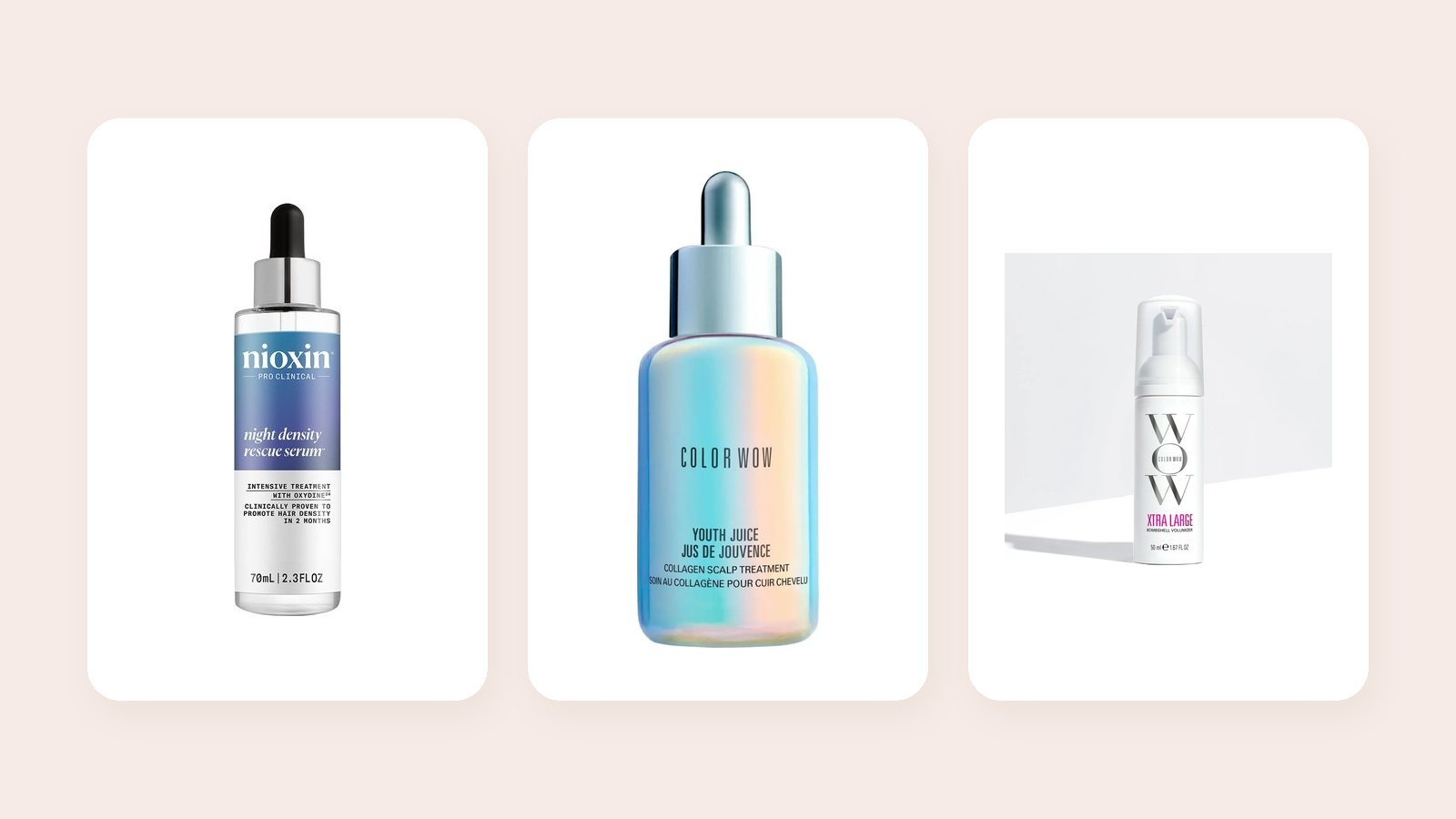
- Color Wow Xtra Large Bombshell Volumizer: a volumizing foam for fine, flat hair.
- K18 HeatBounce: a heat protectant; K18 says it protects hair up to 450°F.
- Color Wow Youth Juice: Color Wow describes it as a vegan leave-in scalp serum.
- Nioxin System 2 leave-on: a leave-on scalp product; Nioxin says it’s made for natural hair that is noticeably thinning.
Call or text (949) 591-5304 with your list and we will confirm stock and pricing, then pick up at our Westminster store.
Related reading: protein vs moisture for hair, how to use heat protectant and how to clean a hairbrush and comb.
FAQ
Is it normal to lose 100 hairs a day?
Yes. The AAD puts normal shedding at 50 to 100 hairs a day, and Cleveland Clinic says most healthy people lose up to 100.
How long does stress-related shedding last?
Cleveland Clinic says acute telogen effluvium usually lasts three to six months. The AAD says hair tends to look full again within six to nine months after shedding stops.
Can a tight ponytail cause hair loss?
Yes, if you wear it tight often. The AAD says constant pulling can cause traction alopecia, which can become permanent.
Do hair growth shampoos and supplements work?
The AAD says hair loss shampoos can make hair look fuller or reduce breakage but can’t regrow hair. It advises taking biotin, iron or zinc only if a blood test shows you need them.
Can I use minoxidil for shedding after having a baby?
The AAD says postpartum shedding stops on its own, and a women’s minoxidil foam label says not to use it for hair loss linked to childbirth. The AAD also advises avoiding minoxidil while breastfeeding.
Sources
- American Academy of Dermatology: Do you have hair loss or hair shedding?, Hair loss: Overview, Hair loss: Signs and symptoms, Hair loss: Who gets and causes, Hair loss: Diagnosis and treatment (2022) and Hair loss: Tips for managing
- American Academy of Dermatology: Hairstyles that pull can lead to hair loss (2024), 10 hair care habits that can damage your hair, Hair styling without damage, Tips for healthy hair (2024), Hair loss in new moms (2025), Female pattern hair loss (2022) and Central centrifugal cicatricial alopecia
- Cleveland Clinic: Telogen Effluvium (2022), Postpartum Hair Loss (2022) and Can Stress Cause Hair Loss? (2026)
- FDA: Approval letter for Women’s Rogaine 5% minoxidil foam (2014), Testing for Biotin Interference in In Vitro Diagnostic Devices (2020) and Biotin Interference with Troponin Lab Tests; DailyMed (NIH): Women’s Rogaine Unscented foam label (2024)
- California Code of Regulations: 16 CCR § 984, Disease and Infestation (via Cornell LII)
This is general information, not medical advice. See a board-certified dermatologist for a diagnosis before starting any hair loss treatment, and follow the Drug Facts label.