

To clean a hairbrush, pull out the trapped hair, wash the bristles in warm water with a little mild shampoo, rinse, and let it air-dry with the bristles facing down. How often is up for debate: a Cleveland Clinic dermatologist told TODAY every one to two weeks, while brush maker Olivia Garden says at least once a month. Below are the steps for plastic, cushioned, boar bristle and wooden brushes, combs and color brushes, plus the California rules for salons.
Key takeaways
- Remove the hair first, then wash the bristles in warm, soapy water, rinse and dry bristles down, away from heat and sun.
- Keep water out of cushion air holes and off wooden handles. Denman says to cover the air hole; Kent says the water should never reach the wood.
- Rinse color brushes right after you apply color, until the water runs clear.
- Advice on timing ranges from every 1–2 weeks to at least once a month. Replace a brush with missing or bent bristles.
- Don’t share brushes. The CDC says lice can spread through combs and brushes used by someone who has lice, though head-to-head contact is the most common way.
- California salons must clean and disinfect combs and other tools before each client (16 CCR § 979).
Why clean your hairbrush?
A brush collects more than loose hair. Olivia Garden lists sebum (scalp oil), dust, dead skin cells and leftover styling products. Kent Brushes says regular cleaning keeps product, oil and dirt from building up in the bristles. Cleveland Clinic dermatologist Melissa Piliang, MD, told TODAY that a brush full of hair doesn’t work as well.
There is a hygiene reason too. The American Academy of Dermatology (AAD) says the fungi that cause ringworm can live on objects, including brushes, for a long time. For buildup on the hair itself, see our clarifying shampoo guide.
How to clean a hairbrush, step by step
These steps suit most plastic and nylon brushes. Cushioned, natural-bristle and wooden brushes need the changes listed below.
- Remove the hair. Lift it out with a tail comb or a brush-cleaning tool. Denman warns against using your fingers, because a pin can catch under a fingernail, and against pressing so hard that you damage the pad.
- Make a wash. Fill a bowl with warm water and a little mild shampoo, as Olivia Garden suggests.
- Soak and scrub. Olivia Garden soaks brushes for a few minutes, then scrubs. Denman uses an old tint brush, a soft scrubbing brush or a soft toothbrush to work out built-up product.
- Rinse well to remove the soap and loosened residue.
- Dry bristles down. Kent’s method: shake off the water, then let the brush air-dry on a level surface with the bristles facing down, never on a heat source or in direct sunlight.
Cushioned and paddle brushes
If your brush has a small air hole, Denman says to cover the hole whenever the brush is under water, so water doesn’t get inside. Olivia Garden co-owner Anne Maza told Spa and Beauty Today in 2020 that paddle brushes with a glued-in cushion should dry cushion side down, so water drains out the back as quickly as possible.
Boar bristle brushes and wooden handles
Kent’s care steps for its bristle brushes:
- Use lukewarm water with a little shampoo or mild detergent.
- Dip the brush in bristles down. Don’t submerge it, and don’t let the water reach the wood.
- Gently wash the bristle tips, shake off the water and dry bristles down, away from heat and sun.
Olivia Garden’s overnight baking-soda soak also comes with a note to leave bamboo brushes out. And a smell is normal: Maza said washed boar bristles can give off an odor that goes away once they are completely dry.
How to clean a comb
Kent, which makes handmade combs, says to wipe the comb with a cloth, brush each tooth with a soft toothbrush to loosen oil and dirt, and let it dry away from heat and direct sun. For everyday plastic combs, you can borrow the first steps of the salon routine that California’s Board of Barbering and Cosmetology requires: remove all visible debris, wash with soap or detergent and water, then dry.
How to clean color brushes after a hair color service
Rinse a color (tint) brush as soon as the application is done. Vega Professional, which makes tinting brushes, gives these steps:
- Rinse the brush right after use in warm water. Add a mild shampoo if needed to remove leftover color.
- Keep rinsing under running water until the water runs clear.
- Reshape the bristles with your fingers.
- Lay the brush flat on a clean towel to dry, then store it somewhere dry and dust-free.
Madison Reed gives home colorists the same timing: once the color is on, wash out the bowl and brush while the color processes. Keep your gloves on while you rinse. If color does get on your hands, see our guide to getting hair dye off skin. In a salon, a color brush that touches a client also has to be disinfected before the next client, as explained below.
How often should you clean a hairbrush?
Sources vary:
- Every one to two weeks: Dr. Piliang’s recommendation for the average person, as reported by TODAY.
- At least once a month, ideally twice: Olivia Garden’s guidance. The brand also says to always remove leftover hair.
- Before every client: the rule for California salons.
When to replace it: Dr. Piliang and salon owner JB Shelton told TODAY it’s time for a new brush once bristles are missing or bent, or when you can’t get it clean.
Is it OK to share a hairbrush?
The CDC and the AAD both say not to share combs and brushes. Head lice spread mainly through head-to-head contact, the CDC says, and less often through an infested person’s combs, brushes or towels. Getting lice has nothing to do with how clean you or your home are. The AAD adds that sharing hats, combs and hair accessories can raise the risk of scalp ringworm.
If someone at home has lice, soak the combs and brushes they used in hot water, at least 130°F. The CDC says 5 to 10 minutes; the AAD says 10 minutes. Some brushes may not suit a hot soak: Kent’s care steps call for lukewarm water on its bristle brushes.
See a doctor or dermatologist if lice treatment isn’t working. Do the same if a child has scaly patches on the scalp with hair loss or broken hairs. Those can be signs of scalp ringworm, which the AAD says needs prescription antifungal medicine.
California salon rules for combs and brushes
California’s Board of Barbering and Cosmetology lists combs and hair clips among “non-electrical tools” (16 CCR § 977). Its Disinfection fact sheet says any tool that touches a customer must be disinfected before it is used on another person. Section 979 sets the order:
Compiled from 16 CCR § 979 and the California Board of Barbering and Cosmetology’s Disinfection fact sheet.
- Remove all visible debris, including hair.
- Clean with soap or detergent and water. The fact sheet also recommends rinsing in clean water.
- Dry completely with a new, clean paper towel.
- Totally immerse in an EPA-registered disinfectant with bactericidal, fungicidal and virucidal activity, used as the label directs.
- Remove tools with gloves or tongs.
- Store in a clean, covered place labeled “Clean” or “Disinfected.” Used tools go in a container labeled “Dirty,” “Soiled” or “Contaminated.”
Keep the disinfectant covered. Change it as the label says, or when it looks cloudy or has debris in it.
Anything that touches a client and can’t be disinfected must be thrown away after one client (§ 981(a)). Because § 979 calls for total immersion, choose station brushes that can go fully under the disinfectant. For glove choices, see our guide to latex, nitrile and vinyl gloves. The rules also bar a salon from knowingly letting a licensee work on a client with head lice until the morning after the client’s first treatment (§ 984).
Why it matters: after a 2024 rise in scalp ringworm among young men in Copenhagen, Danish researchers found the fungus Trichophyton tonsurans on 5 of 122 clippers and 3 of 11 cleaning brushes sampled from local salons. They called for thorough disinfection of tools between every customer.
At OBB
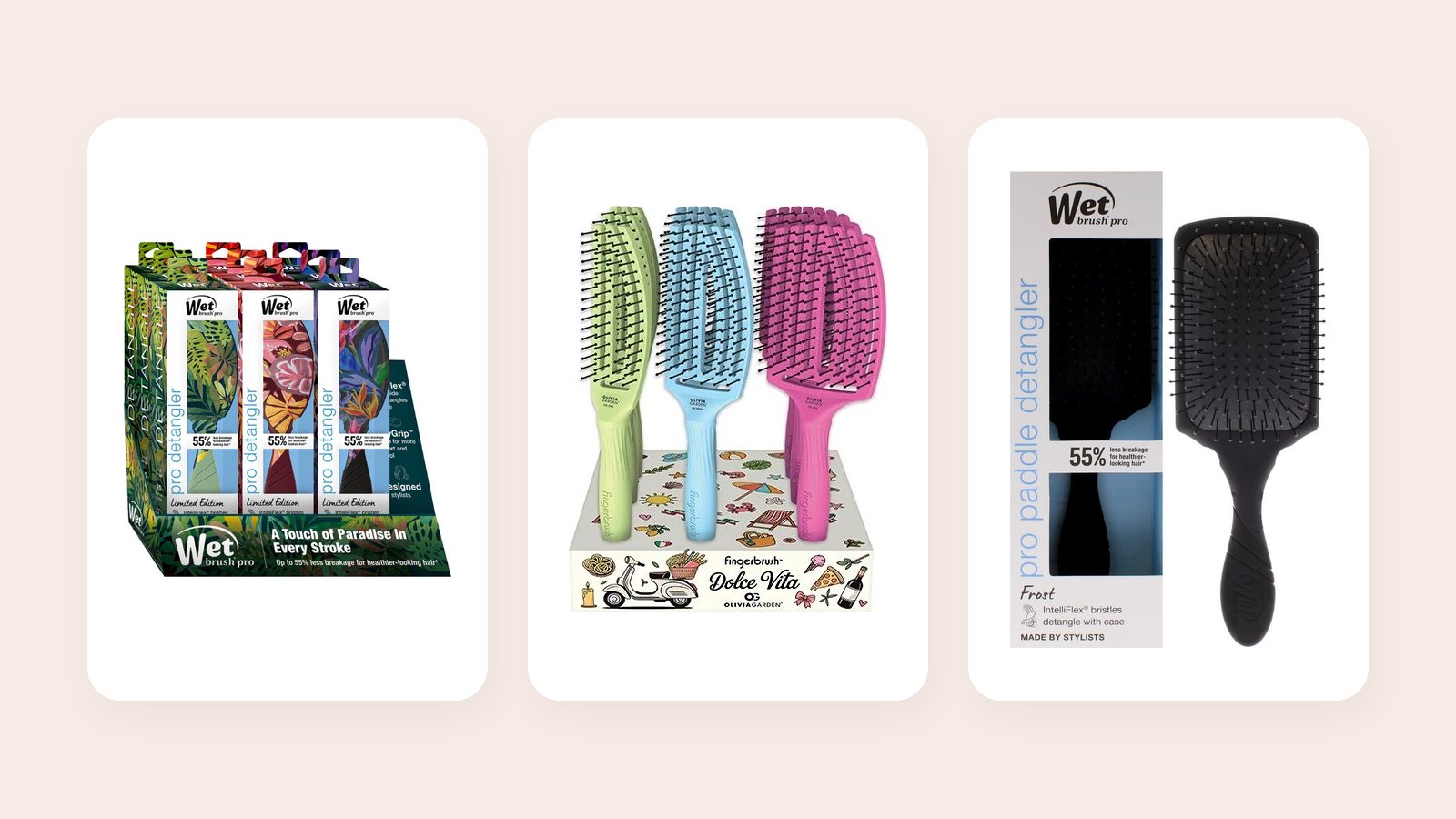
- Wet Brush Pro Detangler: IntelliFlex bristles; Wet Brush says they cause up to 55% less breakage than a leading competitor’s brush in independent testing.
- Wet Brush Pro Paddle Detangler: a large paddle for long, thick hair.
- Wet Brush Pro Frizz-Free Detangler: an ionic brush for wet or dry hair.
- Wet Brush Pro Curl Shaper: detangles and shapes curls, used on wet hair.
- Olivia Garden Fingerbrush Dolce Vita: a vented, curved brush with ionic bristles.
- Colortrak Pro Pack: 4 soft-bristle color brushes, 4 carbon-fiber tail combs and 4 croc clips.
- Framar 3-piece color brush set: three color brushes in one set.
- Cricket Mega Roots Brush: a wide brush for root application.
- Colortrak Pink Vinyl Disposable Gloves: single-use vinyl gloves, latex-free and powder-free.
Call or text (949) 591-5304 with your list and we will confirm stock and pricing, then pick up at our Westminster store.
Related reading: Clarifying Shampoo Guide, How to Get Hair Dye Off Skin and Latex vs Nitrile vs Vinyl Gloves.
FAQ
How often should you clean your hairbrush?
Sources vary. A Cleveland Clinic dermatologist suggests every one to two weeks; Olivia Garden says at least once a month, ideally twice. Salons in California must clean and disinfect tools before every client.
Can you wash a boar bristle brush?
Yes, gently. Kent says to dip only the bristles in lukewarm water with a little shampoo, keep the wood dry and let the brush dry bristles down.
How do you clean a brush with an air hole in the cushion?
Cover the air hole while the brush is under water, as Denman advises. For paddle brushes with a glued-in cushion, Olivia Garden’s co-owner suggests drying cushion side down so water drains out.
How do you clean a brush after lice?
Soak it in hot water, at least 130°F. The CDC says 5 to 10 minutes and the AAD says 10 minutes.
When should you replace a hairbrush?
When bristles are missing or bent, or the brush no longer comes clean, according to the dermatologist and the stylist TODAY interviewed.
Sources
- California Board of Barbering and Cosmetology, Article 12, Health and Safety (16 CCR §§ 977–995) and Licensee Fact Sheet 2: Disinfection
- CDC, About Head Lice
- American Academy of Dermatology, Head lice: Diagnosis and treatment, Head lice: Tips for managing, Ringworm: Who gets and causes and Is your dry scalp something more serious?
- TODAY, How to clean your hairbrush, according to experts (updated January 2025)
- Brush makers’ care instructions: Kent Brushes Product Aftercare, Denman deep-clean guide and Olivia Garden: Why and how you should clean your hairbrushes
- Spa and Beauty Today, cleaning tips from Olivia Garden co-owner Anne Maza (2020)
- Color brush care: Vega Professional tinting brush guide and Madison Reed bowl-and-brush guide
- Shen JJR et al., Dermatophyte contamination of hair clippers and cleaning brushes in Copenhagen hair salons, J Eur Acad Dermatol Venereol 2026
This is general information, not medical or legal advice. Follow your brush maker’s care instructions first, see a doctor for lice or scalp problems that don’t clear up, and check the current rules at barbercosmo.ca.gov.