

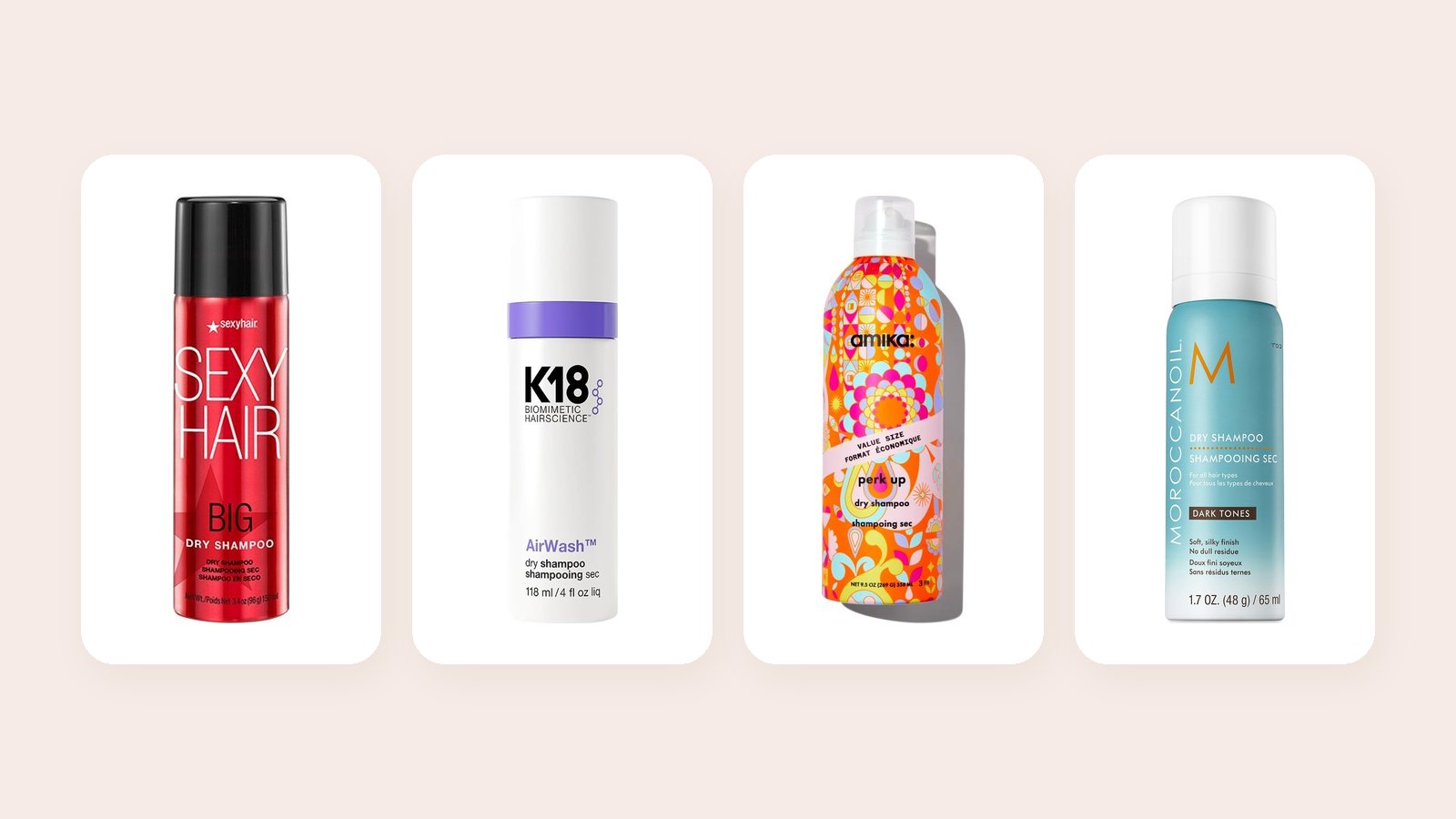
Here’s how to use dry shampoo: spray a small amount on the oily roots of dry hair, let it sit as long as the label says, then massage and brush it out. Dermatologists quoted by the American Academy of Dermatology (AAD) say it’s best to wash with regular shampoo and water after one or two dry shampoos, because dry shampoo soaks up oil but doesn’t clean your scalp.
Key takeaways
- Dry shampoo absorbs oil. It doesn’t clean your hair or scalp (AAD, Cleveland Clinic).
- Use a little, only on oily roots, from the distance on the label. Wait, then massage and brush it out.
- AAD dermatologists advise washing after one or two dry shampoos. Cleveland Clinic says not to use it several days in a row.
- If your scalp itches, burns or gets irritated, stop using it. See a board-certified dermatologist if that doesn’t clear up in a few weeks (AAD).
- Aerosol cans are pressurized. FDA requires a warning not to puncture, burn or store them above 120°F, and flammable ones belong away from heat and flame.
What does dry shampoo actually do?
It absorbs oil so hair looks fresher. It doesn’t wash anything away. Board-certified dermatologist Zoe Draelos, MD, explains on the AAD’s site that dry shampoo contains little particles that absorb oil, and that you still need regular shampoo and water to clean your hair. Cleveland Clinic describes them as alcohol- or starch-based, and Poison Control gives corn or potato starch as examples of what soaks up the oil.
According to Dr. Draelos, the most frequent reason people use dry shampoo is to make hair color, highlights and salon styles like blowouts and up-dos last longer. The AAD adds that it can make hair look fuller, and dermatologist Paradi Mirmirani, MD, notes that some dry shampoos contain pigment that helps cover gray.
How to use dry shampoo, step by step
These steps combine AAD and Cleveland Clinic advice; your product’s own directions come first.
- Start with dry hair and shake the can or bottle.
- Hold it at the distance on the label. Cleveland Clinic says to keep the can at least 6 inches from your scalp.
- Spray only where hair is oily, starting at the roots, a little at a time. You can always add more, the AAD says. Cleveland Clinic suggests skipping the ends, which can get dry or static.
- Let it sit for the time on the label. Dr. Draelos says leaving it on longer does no harm; you just won’t get the best results.
- Massage it into your scalp, then brush or comb it out. The AAD notes that brushing out dry shampoo removes the oil.
- Too much? Hair that feels dry, stiff or gritty has too much product (AAD). Gently brush through the heavy spot, or wash it out.
What four brands’ own directions say:
| Product | Hold it | Then |
|---|---|---|
| amika perk up | 8 inches away; spray roots in a sweeping motion | Wait 30 seconds, then massage or brush through |
| Big Sexy Hair Dry Shampoo | 8 inches away, focusing on roots | Leave on 2 minutes, then brush out |
| Moroccanoil Dry Shampoo Dark Tones | 6–8 inches (15–20 cm) from dry roots | Let dry, massage into scalp, brush out |
| K18 AirWash | 4–6 inches from the scalp; closer to 4 for coily hair | 1 spray per section, then massage and brush or style |
One disagreement: Cleveland Clinic’s general advice is at least 6 inches, while K18’s directions for its non-aerosol mist start at 4. Follow the label of the product in your hand.
Aerosol, non-aerosol or powder: which should you choose?
- Aerosol sprays use a propellant gas to push the product out of a pressurized can.
- Non-aerosol mists spray as a liquid. K18’s directions note that its AirWash mist may feel slightly damp.
- Powders are sprayed or sprinkled on, says Poison Control. Cleveland Clinic notes that some come tinted to match your hair color.
Whatever the type, buy it rather than make it. Cleveland Clinic mentions that shaking cornstarch into your hair gives the same effect, but AAD dermatologists advise against homemade versions. Dr. Mirmirani says DIY mixes of cornstarch, cocoa powder or baking soda can clump, show in your hair and clog pores in your scalp. Dr. Draelos adds that bacteria can digest cornstarch, which can give your scalp an unpleasant odor.
The AAD also suggests choosing a formula made for your hair color and type. If your hair or scalp feels parched after using one, Dr. Mirmirani recommends switching to a fragrance-free product. Poison Control notes that fragrances, preservatives and surfactants in dry shampoos can cause allergic reactions, including contact dermatitis.
How often can you use dry shampoo?
There’s no set number, according to the AAD, but Drs. Draelos and Mirmirani agree it’s best to wash your hair after one or two dry shampoos. Cleveland Clinic puts it another way: don’t use dry shampoo several days in a row. Its dermatologist Wilma Bergfeld, MD, calls it useful for travel, camping, or when illness or injury keeps you from bathing, but only for a little while.
Washing matters. Dr. Mirmirani says shampoo and water remove dead skin cells, oil and microorganisms that build up and can cause dandruff, plus the dry shampoo that accumulates on your scalp and hair. What overuse can lead to, per the AAD and Cleveland Clinic:
- Buildup and breakouts: clogged pores, painful pimples or bacterial infections, and scales or a scalp rash. Cleveland Clinic links those pimples to folliculitis, an infected or inflamed hair follicle that can look like acne.
- Breakage and shedding: the AAD warns that dry shampoo left on hair and scalp can cause both. Cleveland Clinic adds that alcohol, an ingredient in many dry shampoos, can dry hair and make it brittle.
- Seborrheic dermatitis: an itchy, scaly scalp rash that Dr. Draelos says can develop if you use only dry shampoo and skip washing.
How often to wash depends on your hair. Cleveland Clinic dermatologist Shilpi Khetarpal, MD, suggests at least every other day for finer hair and at least every two weeks for coarse, coiled or tightly curled hair. If you use a lot of styling products, she suggests a clarifying shampoo once or twice a month to remove buildup. See our clarifying shampoo guide.
When to see a dermatologist: the AAD says to stop using dry shampoo if you get itching, burning or other irritation on your scalp. It should clear up in a few weeks. If it stays the same or gets worse, see a board-certified dermatologist.
How to avoid a white cast on dark hair
- Match the formula to your hair color. The AAD says dry shampoos come in formulas for different hair colors, and Cleveland Clinic notes tinted powders.
- Use less than you think. The AAD says too much can leave visible particles in your hair. Start small and add more only if hair still feels greasy.
- Keep the label distance and aim at the roots, not the lengths.
- Give it time, then work it in. Spread it evenly, wait as directed, massage and brush it out (AAD).
Is aerosol dry shampoo safe? Recalls, fumes and storage
The benzene recalls. FDA’s website posted these company recalls of aerosol dry shampoos over benzene:
- December 17, 2021: Procter & Gamble recalled aerosol dry shampoo and dry conditioner sprays from Pantene, Aussie, Herbal Essences and Waterless, plus discontinued Old Spice and Hair Food dry shampoos.
- October 18, 2022 (posted by FDA October 21): Unilever recalled select lot codes of aerosol dry shampoos made before October 2021 from Dove, Nexxus, Suave, TIGI (Rockaholic and Bed Head) and TRESemmé.
Both companies traced the benzene to the propellant that sprays the product out of the can, and P&G said benzene isn’t an ingredient in its products. Both notices call benzene a human carcinogen. Both companies said that, by their assessments, daily exposure at the levels detected would not be expected to cause adverse health consequences, and that they were recalling out of caution. Each recall covered only the products and codes in its notice, and each told consumers to stop using them.
FDA posts such company announcements as a public service. Poison Control says benzene in dry shampoo is most likely a contaminant and that dry shampoo containing benzene should be avoided, but that there’s no evidence occasional use is harmful. Check FDA’s recalls page for any newer notices.
Fumes. Poison Control recommends using dry shampoo in a well-ventilated area, because breathing it in within enclosed spaces can cause coughing and breathing trouble. If it gets in someone’s eyes or causes symptoms after being inhaled or swallowed, call Poison Control at 1-800-222-1222 or use its online tool.
Storage. FDA rules require cosmetic aerosols to carry this warning: “Avoid spraying in eyes. Contents under pressure. Do not puncture or incinerate. Do not store at temperature above 120°F. Keep out of reach of children.” amika’s safety information for perk up goes further: it calls the can a flammable aerosol and says to keep it away from heat, sparks, open flames and hot surfaces, not to smoke while using it, and to protect it from sunlight. At the styling station, set hot tools down away from where you spray.
At OBB
- K18 AirWash Dry Shampoo: a non-aerosol dry shampoo mist.
- amika perk up dry shampoo (value size): amika says the formula is talc-free.
- Moroccanoil Dry Shampoo Dark Tones: a dry shampoo made for dark hair.
- Big Sexy Hair Dry Shampoo: a spray dry shampoo from Sexy Hair.
- Olaplex Nº.4C Bond Maintenance Clarifying Shampoo: Olaplex says it removes mineral deposits, chlorine and product build-up.
- Pravana ChromaSilk Clear Cleanse: a clarifying shampoo.
Call or text (949) 591-5304 with your list and we will confirm stock and pricing, then pick up at our Westminster store.
Related reading: clarifying shampoo guide, protein vs moisture for hair and how to use heat protectant.
FAQ
Does dry shampoo clean your hair?
No. It absorbs oil so hair looks cleaner, but the AAD and Cleveland Clinic say only shampoo and water truly clean hair and scalp.
How many days in a row can you use dry shampoo?
AAD dermatologists say it’s best to wash after one or two dry shampoos, and Cleveland Clinic advises against using it several days in a row.
Can dry shampoo cause hair loss?
The AAD says dry shampoo left on the hair and scalp can cause breakage and shedding, and Cleveland Clinic says an unhealthy scalp can lead to inflammation that reduces hair growth. Wash regularly, and see a board-certified dermatologist if shedding or irritation continues.
Is dry shampoo safe after the benzene recalls?
The 2021 and 2022 recalls covered specific aerosol products and lot codes listed in each notice. Poison Control says there’s no evidence occasional use is harmful and suggests using it in a well-ventilated area.
Can I bring dry shampoo on a plane?
TSA allows aerosol dry shampoo in carry-on bags at 3.4 oz (100 ml) or less. In checked bags, the FAA limits each container to 0.5 kg (18 oz) or 500 ml (17 fl oz).
Sources
- American Academy of Dermatology, Dry shampoo: Dermatologists’ tips for getting your best results (updated 3/26/24)
- Cleveland Clinic, Does Dry Shampoo Actually Clean Your Hair?, How Often Should You Wash Your Hair? and Folliculitis
- FDA-posted recall notices: P&G aerosol dry shampoo and dry conditioner recall (2021) and Unilever dry shampoo recall (2022); FDA, Recalls, Market Withdrawals, & Safety Alerts
- FDA, Cosmetics Labeling Guide (aerosol warnings, 21 CFR 740.11)
- Poison Control (National Capital Poison Center), Does dry shampoo contain benzene?
- Manufacturer directions: amika perk up, Big Sexy Hair Dry Shampoo, Moroccanoil Dry Shampoo Dark Tones and K18 AirWash
- TSA, Dry Shampoo (aerosol)
This is general information, not medical advice. Follow the directions and warnings on your product’s label. If your scalp itches, burns, flakes or breaks out, or you notice more shedding than usual, see a board-certified dermatologist.