

The American Academy of Dermatology (AAD) says to wear a broad-spectrum sunscreen with SPF 30 or higher on skin that clothing doesn’t cover every day you’ll be outside, even when it’s cloudy. Use about 1 ounce for your body and at least 1 teaspoon for your face, 15 minutes before you go out, and reapply every 2 hours outdoors and after swimming or sweating. Here is what the AAD, the FDA and the CDC say about choosing sunscreen, applying it and wearing it with makeup.
Key takeaways
- Choose broad spectrum, SPF 30 or higher and water resistant (AAD). The FDA and CDC recommend at least SPF 15.
- Use about 1 ounce, a shot glass, for your body and at least 1 teaspoon for your face (AAD).
- Outdoors, reapply at least every 2 hours and after swimming, sweating or toweling off.
- Makeup with SPF doesn’t replace reapplying. Never spray sunscreen straight onto your face (FDA).
- Throw out sunscreen past its expiration date, or 3 years after purchase if it has no date (FDA).
Why wear sunscreen every day?
The CDC says most skin cancers are caused by too much exposure to ultraviolet (UV) rays. The FDA says UV exposure can cause sunburn, early skin aging such as spots and wrinkles, eye damage, and skin cancer, the most common cancer in the U.S. The AAD estimates that one in five Americans will develop skin cancer in their lifetime, and says sunscreen helps prevent skin cancer, wrinkles and age spots.
UV doesn’t take days off. The AAD says your skin is exposed every time you go outside, even on cloudy days and in winter. The FDA says up to 80% of UV rays can get through clouds. Window glass blocks UVB (burning) rays but not UVA (aging) rays, according to the AAD.
Every skin tone needs protection. The FDA says people of all skin colors are at risk, though fair skin may burn more easily.
Which sunscreen to choose: broad spectrum, SPF and water resistance
- Broad spectrum. Only products that pass the FDA’s test for both UVA and UVB protection can use the term. If a sunscreen isn’t broad spectrum or has an SPF below 15, the FDA requires a warning: the product has been shown only to help prevent sunburn, not skin cancer or early skin aging.
- SPF. SPF measures sunburn protection, mostly from UVB. The AAD recommends SPF 30 or higher, while the FDA and CDC recommend at least 15. The AAD says SPF 30 filters out 97% of UVB rays and higher numbers only slightly more. SPF isn’t a timer: the FDA says it relates to the amount of sun exposure, not time.
- Water resistant. The label must say whether protection lasts 40 or 80 minutes while swimming or sweating. No sunscreen may be called “waterproof,” “sweatproof” or “sunblock” (FDA).
Mineral or chemical sunscreen?
The AAD calls a sunscreen physical, or mineral, when its active ingredients are zinc oxide, titanium dioxide or both. Anything else is chemical, and hybrids mix the two. Dermatologists recommend mineral sunscreen for sensitive skin, but the AAD says any type protects well if it is broad spectrum, water resistant and SPF 30 or higher. The “Active ingredients” section of the label tells you which kind you have.
The FDA has proposed that zinc oxide and titanium dioxide are generally recognized as safe and effective. It has asked for more data on 12 other ingredients, including avobenzone, homosalate, octocrylene and oxybenzone. The FDA says that request is not a conclusion that those ingredients are unsafe. In June 2026 it added bemotrizinol as a permitted sunscreen ingredient.
How much sunscreen to use and when to put it on
The AAD says people who get sunburned usually didn’t reapply, used too little, or used an expired sunscreen. Getting the amount right is the first fix.
Compiled from the AAD and the FDA.
- Apply to dry skin about 15 minutes before you go outside (AAD, FDA).
- Face: at least 1 teaspoon, about the length of your index and middle fingers (AAD).
- Body: at least 1 ounce, about a shot glass, for skin clothing doesn’t cover. Larger bodies need more (AAD).
- Don’t miss your ears, nose, lips, back of the neck, hands, tops of the feet, hairline and any exposed scalp (FDA).
- Sticks: four passes back and forth over each area, then rub in (AAD).
- Sprays: spray until skin glistens, rub it in, and never spray near your face or mouth (AAD).
Many spray sunscreens contain flammable alcohol. Keep them away from heat, open flames and cigarettes (FDA, AAD).
With sprays, it’s hard to tell how much you’ve used. The AAD says a typical 6-ounce spray bottle holds about six applications.
How often should you reapply sunscreen?
Sunscreen wears off (CDC). When you’re outdoors, reapply:
- at least every 2 hours (AAD, FDA);
- right after swimming, sweating or toweling off (AAD, CDC);
- in water or sweat, at the 40- or 80-minute mark on a water-resistant label (AAD).
A higher SPF doesn’t buy more time: the AAD says high and low SPFs last the same amount of time. Even with a water-resistant sunscreen and dry skin, you still reapply every 2 hours. If you take medication, ask your health care professional about sun precautions, since the FDA says some medications may increase sun sensitivity.
How to wear sunscreen under makeup
Put on sunscreen first, using the full teaspoon for your face, then your makeup. Foundation or moisturizer with SPF is convenient, but the AAD says you still need to reapply sunscreen about every 2 hours when you’re outdoors.
A tinted sunscreen can help. The AAD says tinted sunscreens contain iron oxide, which helps protect skin from visible light, and a shade that matches your skin can help you avoid a white cast.
To reapply over makeup when you’re outside:
- Stick: the AAD says sticks are easy to use under the eyes and on the backs of the hands.
- Spray or mist: the FDA says spray sunscreens should never be applied directly to your face. The AAD says to spray it into your hands first, then apply it to your face. Always follow the product’s label.
- Powder: sunscreen powders can be legally sold. In 2021, though, the FDA proposed that it needs more data before it can call powders generally recognized as safe and effective.
Sunscreen for darker skin tones, lips, scalp and hands
Darker skin tones. The AAD says anyone can get skin cancer, and in people with darker skin tones it’s often advanced by the time it’s diagnosed. It may show up where the sun rarely reaches, such as the palms, soles and nails, and the AAD lists a dark line or streak in a nail as one warning sign. Nail techs who notice one can suggest a dermatologist visit. The darker your skin, the higher the risk that sunlight causes dark spots, so the AAD suggests a tinted, broad-spectrum SPF 30+ sunscreen.
Lips. Skin cancer can form on the lips, so the AAD recommends a lip balm or lipstick with SPF 30 or higher.
Scalp and hair. If your hair is thin, apply sunscreen to your scalp or wear a wide-brimmed hat (AAD). The FDA lists the hairline and exposed scalp among commonly missed spots, and the AAD says gels work well on hairy areas like the scalp. The CDC suggests a hat with a brim all the way around that shades your face, ears and the back of your neck. For colored, permed or relaxed hair, the AAD suggests a wide-brimmed hat or a leave-in conditioner with zinc oxide.
Hands and gel manicures. Before a gel manicure, the AAD suggests applying a broad-spectrum, water-resistant SPF 30+ sunscreen to your hands. Another option is dark, opaque gloves with the fingertips cut off, to shield skin from the UV light that sets the polish.
Does sunscreen expire?
Yes. The FDA requires an expiration date unless testing shows a product stays stable for at least 3 years, so a sunscreen without a date should be considered expired 3 years after purchase. Throw out expired sunscreen, and any bottle when you don’t know its age (FDA).
- Write the purchase date on bottles that have no expiration date (AAD).
- Replace sunscreen that has changed color or consistency (AAD).
- Keep it out of direct sun and hot cars. The CDC says heat shortens its shelf life, and the FDA suggests wrapping it in a towel or keeping it in the shade outdoors.
Used daily in the right amount, the AAD notes, a bottle shouldn’t last long anyway.
At OBB
Read the Drug Facts label on any sunscreen for broad-spectrum status, water resistance and directions.
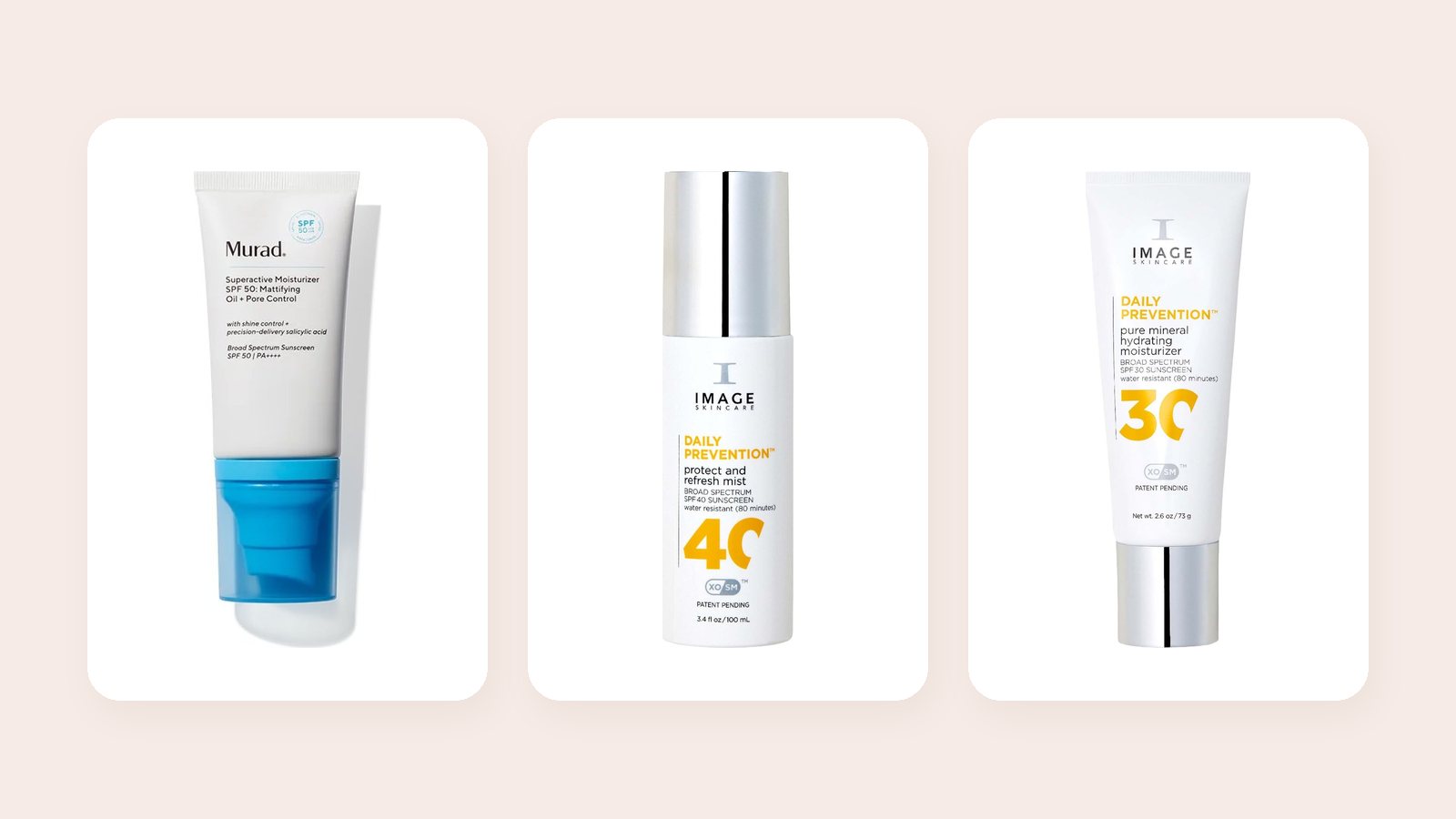
- IMAGE Skincare Daily Prevention Protect and Refresh Mist SPF 40: broad spectrum and water resistant for 80 minutes. IMAGE says it’s easy to reapply over makeup.
- IMAGE Skincare Pure Mineral Hydrating Moisturizer SPF 30: a mineral sunscreen moisturizer.
- Murad Superactive Moisturizer SPF 50, Mattifying: Murad says it contains salicylic acid.
- Murad Superactive Moisturizer SPF 50, Brightening (travel size): Murad says it contains vitamin C.
- Moroccanoil Argan Butter Lip Balm Trio: no SPF is listed, so it is not sun protection. Outdoors, use a lip balm with SPF 30 or higher (AAD).
Call or text (949) 591-5304 with your list and we will confirm stock and pricing, then pick up at our Westminster store.
Related reading: how to apply self-tanner evenly, how to keep hair color from fading and TSA rules for beauty products and hair tools.
FAQ
How much sunscreen should I put on my face?
At least 1 teaspoon, about the length of your index and middle fingers, according to the AAD. Rub it in well.
Do I need sunscreen if I’m indoors all day?
The AAD’s advice is to apply sunscreen every day you’ll be outside, even when it’s cloudy. It also notes that UVA rays, which age skin, pass through window glass.
Is makeup with SPF enough?
Not on its own outdoors. The AAD says makeup and moisturizers with SPF are convenient, but you still need to reapply sunscreen about every 2 hours outside.
Is SPF 50 much better than SPF 30?
Only slightly. The AAD says SPF 30 filters out 97% of UVB rays, higher numbers filter a bit more, and a higher SPF doesn’t last longer between reapplications.
Do people with dark skin need sunscreen?
Yes. The AAD and FDA say people of every skin tone can get skin cancer, and the AAD recommends tinted sunscreen to help prevent dark spots.
Sources
- American Academy of Dermatology: How to apply sunscreen (2025), Sunscreen FAQs (2025), How to decode a sunscreen label (2026) and How to use stick and spray sunscreens (2025)
- American Academy of Dermatology: Finding skin cancer in darker skin tones (2025), How to prevent skin cancer (2025), Gel manicures: Tips for healthy nails and 10 hair care habits that can damage your hair
- FDA: Sunscreen: How to Help Protect Your Skin from the Sun (2026), Tips to Stay Safe in the Sun (2026) and Questions and Answers: FDA’s regulatory actions on over-the-counter sunscreen (2026)
- CDC: Sun Safety Facts (2026)
This is general information, not medical advice. Follow the Drug Facts label on your sunscreen, ask a doctor before using sunscreen on a baby under 6 months, and see a board-certified dermatologist about any new or changing spot.