

Wash your face twice a day, morning and night, and again as soon as you can after heavy sweating, the American Academy of Dermatology (AAD) says. Use lukewarm water and a gentle cleanser, apply it with your fingertips without scrubbing, then pat dry and moisturize. Here is the full routine from the AAD, Cleveland Clinic and the FDA, plus what changes for makeup, exfoliating cleansers, and acne-prone or sensitive skin.
Key takeaways
- Wash twice a day and after sweating. Washing more often can irritate skin and worsen acne (AAD).
- Use lukewarm water, your fingertips and a gentle, non-abrasive cleanser. Washcloths, sponges and scrubbing can irritate skin (AAD).
- Take off all makeup before bed. Even non-comedogenic makeup can cause acne if you sleep in it (AAD).
- Use an exfoliating cleanser a few times a week in place of your regular wash (Cleveland Clinic). Stronger methods need fewer sessions (AAD).
- In the morning, sunscreen goes on after your other skin care and before makeup (AAD).
How often should you wash your face?
The AAD’s advice is to wash twice a day, morning and night, plus after heavy sweating. Sweat irritates skin, especially under a hat or helmet, so wash it off as soon as possible. For acne-prone skin, the AAD warns that washing more than twice a day can irritate the skin and make acne worse.
Dry or sensitive skin may need less. A Cleveland Clinic dermatologist suggests plain water in the morning and a cleanser only at night, and a dermatologist quoted in an AAD news release says one wash in the evening may be enough. After a workout, the AAD suggests a shower, or at least a gentle, non-comedogenic cleanser. Pat sweat off with a clean towel instead of rubbing, which can irritate skin and cause breakouts.
How to wash your face, step by step
These steps follow the AAD’s “Face washing 101” and a Cleveland Clinic guide.
- Pick a gentle cleanser. The AAD recommends a gentle, non-abrasive cleanser without alcohol. Cleveland Clinic says liquid cleansers are generally gentler than bar soap, and fragrance-free ones gentler still.
- Wet your face with lukewarm water. Hot water can strip the skin barrier and leave skin drier, Cleveland Clinic says.
- Apply the cleanser with your fingertips. The AAD says a washcloth, mesh sponge or anything other than your fingertips can irritate skin. Massage gently, and include your jaw and neck (Cleveland Clinic).
- Rinse with lukewarm water until no suds or residue remain.
- Pat dry with a soft, clean towel. Rubbing can disrupt the skin barrier (Cleveland Clinic).
- Moisturize. The AAD says to use moisturizer if your skin is dry or itchy, and notes that oily skin needs it too. Its dry-skin tips suggest applying moisturizer while skin is still damp.
- In the morning, finish with sunscreen. The AAD says it goes on after your other skin care products and under makeup. See our guide to daily sunscreen for how much to use and when to reapply.
How to take off makeup before bed
The AAD says to remove all makeup before bed, every night, because even non-comedogenic makeup can cause acne if you sleep in it. Too tired to wash? It suggests a makeup remover towelette labeled non-comedogenic. A Cleveland Clinic dermatologist adds that wipes are fine in a pinch but not as your everyday cleanser, since their preservatives and the rubbing they need can be harsh on the skin barrier.
Double cleansing, with an oil-based cleanser or balm first and a gentle cleanser second, splits Cleveland Clinic’s own dermatologists. One suggests it, or micellar water first, for people who wear makeup. Another says most people don’t need it and warns that oil-based cleansers can cause breakouts on acne-prone skin. A third says double cleansing causes more harm than good.
Exfoliating cleansers: how often to use them
Exfoliation removes dead skin cells from the surface. The AAD describes two kinds, mechanical (a brush, pad, sponge or scrub) and chemical (acids such as alpha and beta hydroxy acids), and says exfoliation isn’t for everyone.
- How often: it depends on your skin type and method, and the more aggressive the exfoliation, the less often you should do it (AAD). Cleveland Clinic suggests a glycolic acid exfoliant a couple of times a week, in place of your regular cleanser, not on top of it.
- Dry, sensitive or acne-prone skin: you may prefer a washcloth and a mild chemical exfoliator, since mechanical exfoliation can be too irritating (AAD).
- Darker skin tones: the AAD advises against strong chemical or mechanical exfoliation, which can lead to more dark spots.
- When to skip it: never on open cuts, wounds or sunburn. If you use a retinoid, retinol or benzoyl peroxide, the AAD says exfoliating can worsen dryness or even cause breakouts.
Mind the sun. The FDA says alpha hydroxy acids (AHAs), such as glycolic and lactic acid, can make skin more sensitive to the sun. It recommends that AHA products tell users to wear sunscreen and protective clothing and to limit sun exposure while using them and for a week afterward. For beta hydroxy acids such as salicylic acid, the FDA advises testing on a small area first, using sun protection and avoiding use on infants and children.
How to wash acne-prone skin
Be gentle. The AAD says scrubbing irritates skin and can make acne flare. Use a mild, non-comedogenic cleanser with your fingertips, rinse with warm water and pat dry with a clean towel. During treatment, the AAD also suggests skipping astringents, toners and exfoliants, which can dry skin and make acne look worse.
Medicated washes are over-the-counter (OTC) drugs. Cleveland Clinic says cleansers with salicylic acid or benzoyl peroxide can help people with acne. FDA rules allow 0.5% to 2% salicylic acid and 2.5% to 10% benzoyl peroxide in OTC acne products, and require warnings on the Drug Facts label, including:
- skin irritation and dryness are more likely if you use another topical acne medication at the same time;
- benzoyl peroxide may bleach hair and dyed fabrics, so keep it off your hair and colored towels, and use sunscreen when you go outside. Cleveland Clinic suggests a white washcloth.
Give a product time. The AAD says to use an acne treatment for at least 4 weeks (another AAD page says 6 to 8 weeks) before switching, and clearing can take a few months. Don’t pop or squeeze pimples: the AAD says it can push debris deeper and lead to scarring.
Sensitive skin: choose gentle products and test first
For skin that reacts easily, the AAD suggests products labeled “fragrance-free.” Products labeled “unscented,” or made with plant-based botanical ingredients, may still contain fragrance-related ingredients. Cleveland Clinic says cleansers with acids may irritate sensitive skin, and one of its dermatologists prefers a creamy face wash to a gel. Add one new product at a time, a dermatologist advises in an AAD news release.
Compiled from the AAD and the FDA.
- Pick a quarter-sized spot that won’t get rubbed or washed, such as the underside of your arm or the bend of your elbow.
- Apply your normal amount there twice a day for 7 to 10 days. For a cleanser, leave it on for 5 minutes, or as long as the directions say, then rinse.
- No redness, itching or swelling after 7 to 10 days? Go ahead and use it.
- If you react, gently wash it off and don’t use it again. A cool compress or petroleum jelly can soothe the skin.
Some OTC acne labels include a “Sensitivity Test for a New User”: apply sparingly to one or two small affected areas for the first 3 days (FDA).
When to see a dermatologist
- Deep or painful acne, or cysts and nodules that can scar (AAD).
- Acne that hasn’t cleared with nonprescription treatment, or that leaves dark marks or scars (AAD).
- A severe product reaction that a cool compress or petroleum jelly doesn’t relieve (AAD).
- Dry skin that doesn’t improve with gentle care. The AAD says it can be a sign of a condition such as atopic dermatitis (eczema) or psoriasis.
- A spot that looks different from your others, or that changes, itches or bleeds (AAD).
At OBB
The acne cleanser and both SPF moisturizers are OTC drugs. Read their Drug Facts labels before use.
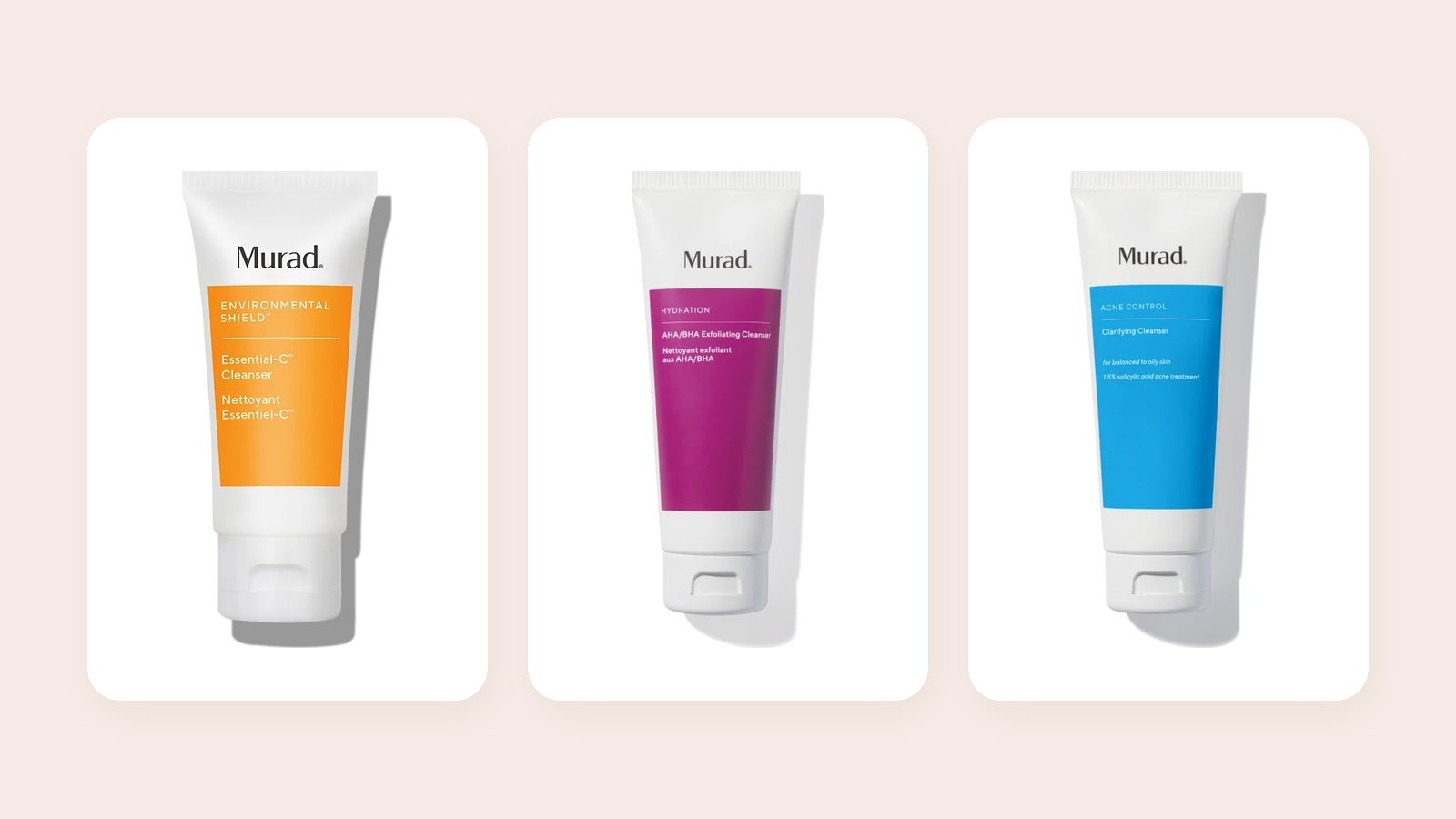
- Murad Environmental Shield Essential-C Cleanser (travel size): Murad describes it as a foaming gel cleanser with vitamins A, C and E and a citrus scent, for morning and night.
- Murad AHA/BHA Exfoliating Cleanser: Murad says it combines salicylic, lactic and glycolic acids with jojoba beads, and directs use 2 to 3 times a week with SPF during the day.
- Murad Acne Control Clarifying Cleanser: its Drug Facts list salicylic acid 1.5% for the management of acne.
- IMAGE Skincare Daily Prevention Pure Mineral Hydrating Moisturizer SPF 30: the active ingredient is zinc oxide 18.1%. IMAGE says it’s broad spectrum, fragrance-free and non-comedogenic.
- Murad Superactive Moisturizer SPF 50: Mattifying Oil + Pore Control: Broad Spectrum SPF 50, per its label, which also says to use a water-resistant sunscreen if you swim or sweat. Murad says it’s non-comedogenic.
Call or text (949) 591-5304 with your list and we will confirm stock and pricing, then pick up at our Westminster store.
Related reading: the 48-hour hair dye patch test, dry, cracked hands from frequent hand washing and how to use a vitamin C serum.
FAQ
Is it bad to wash your face only once a day?
Not necessarily. A Cleveland Clinic dermatologist says it isn’t really bad if you wash in the evening, and a dermatologist quoted by the AAD says one evening wash may be enough for dry or sensitive skin.
Should I use hot or cold water?
The AAD recommends lukewarm water. Cleveland Clinic says hot water can strip the skin barrier and cause dryness, while cold water is fine if you prefer it.
Can I use a washcloth?
The AAD says to apply cleanser with your fingertips, because a washcloth or mesh sponge can irritate skin. Its exfoliation advice does allow a washcloth as a mild option for some skin types.
How often should I use an exfoliating face wash?
It depends on your skin and the product. The AAD says stronger exfoliation needs fewer sessions, Cleveland Clinic suggests a couple of times a week, and Murad directs its AHA/BHA cleanser 2 to 3 times a week.
Sources
- American Academy of Dermatology: Face washing 101, How to safely exfoliate at home (2026), How to test skin care products (2021), Dermatologist-recommended skin care for your 20s (2023), 10 skin care secrets for healthier-looking skin (2024), How to control oily skin (2024), Dermatologists’ top tips for relieving dry skin (2026) and How your workout can affect your skin (2021)
- American Academy of Dermatology, acne: 10 skin care habits that can worsen acne, Acne: Tips for managing (2022) and 9 things to try when acne won’t clear (2023); news release: A dermatologist’s guide to skincare from growing up to glowing up (2025)
- Cleveland Clinic: How Often Should You Wash Your Face? (2025), A Guide on How to Wash Your Face (2025), Double Cleansing Method Explained (2022), How To Choose an Acne Face Wash (2023) and How To Order Your Skin Care Routine (2025)
- FDA: Alpha Hydroxy Acids (2022), Beta Hydroxy Acids (2022) and OTC Monograph M006: Topical Acne Drug Products (2021)
- DailyMed (NIH): Murad Clarifying Cleanser label (2025), Murad Superactive Moisturizer SPF 50: Mattifying label (2025) and IMAGE Pure Mineral Hydrating Moisturizer SPF 30 label (2024)
This is general information, not medical advice. Follow the Drug Facts label on acne and sunscreen products, stop using any product that irritates your skin, and see a board-certified dermatologist for acne that won’t clear or any spot that changes.