

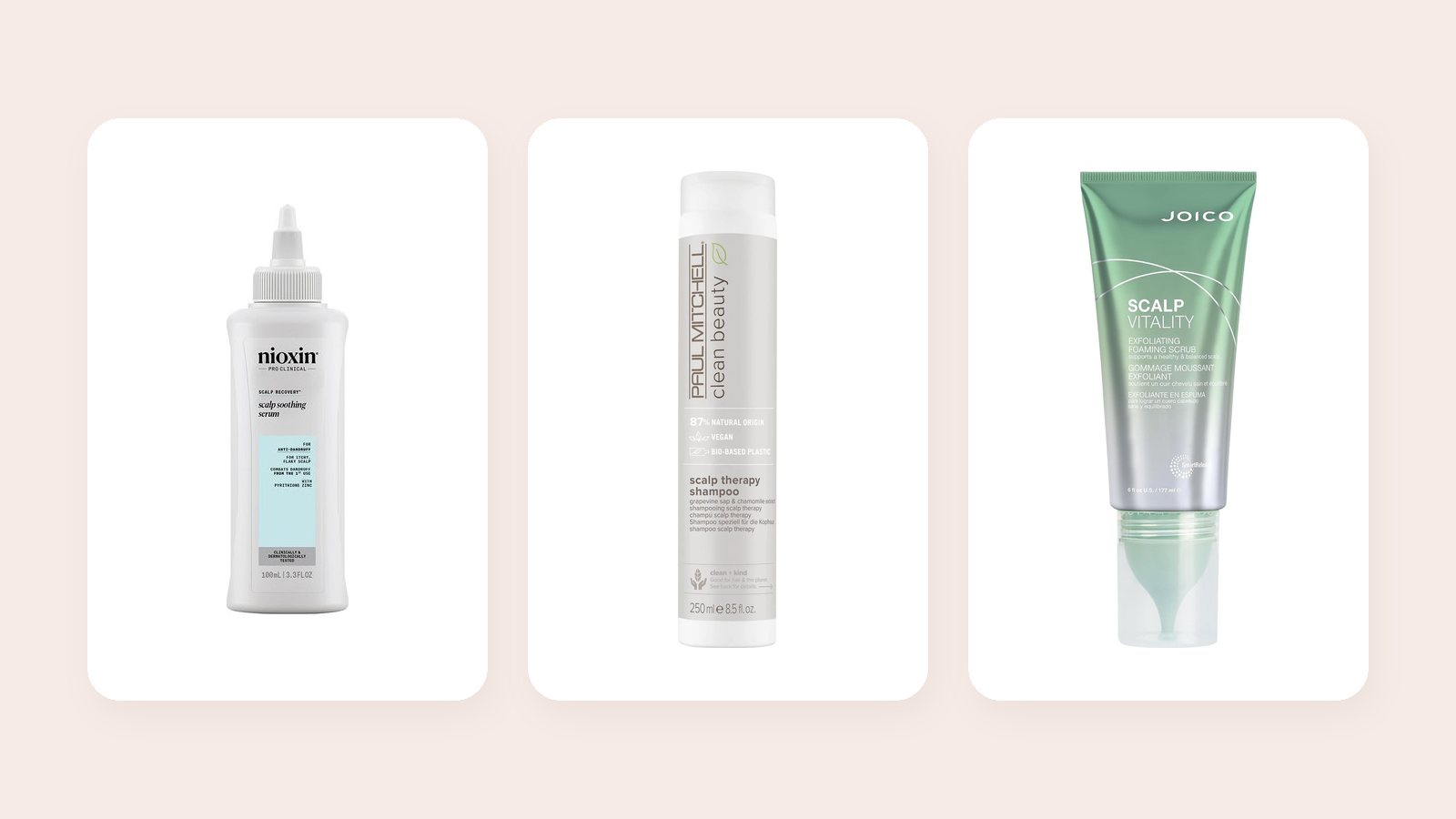
Dandruff and dry scalp both cause itchy flakes, but dandruff is linked to oil and a yeast that lives on the skin, while a dry scalp has lost too much moisture. Dandruff usually improves with a dandruff shampoo, and a dry scalp with a gentle, non-medicated shampoo, the AAD says.
Key takeaways
- Dandruff is a mild form of seborrheic dermatitis. It isn’t contagious or caused by unclean skin (Mayo Clinic, AAD).
- Dry scalp comes from moisture loss: stripping hair products, low humidity, cold weather and age (Cleveland Clinic).
- Greasy patches with white or yellow scales suggest seborrheic dermatitis; dry skin elsewhere on your body suggests dry scalp.
- The AAD names six dandruff shampoo ingredients: zinc pyrithione, salicylic acid, sulfur, selenium sulfide, ketoconazole and coal tar.
- For a dry scalp, Cleveland Clinic suggests a gentle, moisturizing shampoo, less frequent washing and a humidifier.
- See a dermatologist if a few weeks of dandruff shampoo doesn’t help, or if your scalp is red, swollen, painful or losing hair.
Dandruff vs dry scalp: how to tell the difference
They can look alike, and the AAD says it can be tricky to tell them apart without a dermatologist’s help. Clues from the AAD, Mayo Clinic and Cleveland Clinic:
| Dandruff | Dry scalp | |
|---|---|---|
| Cause | Scalp oil plus a yeast that lives on everyone’s skin | The scalp loses too much water |
| Flakes | White or yellow, sometimes on greasy patches | Itchy flakes of dry skin |
| Skin | Scalp may look red, oily and scaly (on darker skin, pink, purplish, lighter or darker); can also affect eyebrows, nose, ears, beard area and chest | The rest of your body may be dry too |
| Triggers | Stress, cold and dry weather | Stripping hair products, low humidity, cold climates, age |
| First fix | Dandruff shampoo | Gentle, non-medicated shampoo |
Sources differ on some clues. The AAD and Mayo Clinic describe dandruff flakes as small, while Cleveland Clinic calls them larger pieces. Mayo Clinic also lists dry skin as one cause of dandruff; Cleveland Clinic treats dry scalp as a separate condition. A doctor can usually tell just by looking at your scalp (Mayo Clinic).
What causes dandruff and dry scalp?
Dandruff. The exact cause of seborrheic dermatitis is unknown. The AAD says dermatologists believe a yeast that lives on everyone’s skin and the oil it feeds on play a role. It is not caused by unclean skin and is not an allergy (AAD). Stress and cold, dry weather can make dandruff worse (Mayo Clinic).
Habits matter too. The AAD lists not shampooing often enough as a common reason for flakes. Mayo Clinic says gels, sprays and other styling products can build up on the scalp, make it oily and cause more dandruff. A Cleveland Clinic dermatologist adds that regularly sleeping on wet hair keeps the scalp moist, which can encourage yeast and dandruff.
Dry scalp. Cleveland Clinic and the AAD point to hair products that strip the scalp’s natural oils, low humidity and cold climates; Cleveland Clinic adds aging. Both say hot water can dry out the scalp.
What helps dandruff
Mild dandruff often improves with regular washing; Mayo Clinic suggests washing more often with a gentle shampoo first. If that isn’t enough, try a dandruff shampoo. The FDA considers an anti-dandruff shampoo both a cosmetic and a drug, and over-the-counter drug labels carry a Drug Facts panel that lists the active ingredient, warnings and directions.
The AAD names these active ingredients: zinc pyrithione, salicylic acid, sulfur, selenium sulfide, ketoconazole and coal tar. Mayo Clinic says ketoconazole, pyrithione zinc and selenium sulfide help kill or slow the fungus that may cause dandruff, while salicylic acid and coal tar help with itching, scaling and flaking.
Compiled from the American Academy of Dermatology, Mayo Clinic and Cleveland Clinic.
- Follow the label. Directions differ by product and by hair texture (AAD).
- Apply it to the scalp and work up a lather (AAD, Mayo Clinic). With curly or coily hair, keep it on the scalp only, because dandruff ingredients can dry hair (AAD).
- Leave it on as long as the label says. The AAD says some need up to 5 to 10 minutes; Cleveland Clinic says at least five minutes.
- Rinse well, then shampoo and condition your lengths with your usual products if needed (AAD).
- The AAD suggests dandruff shampoo twice a week for fine or straight hair or an oily scalp, with frequent washing in between, and about once a week for coarse, curly or coily hair.
- If one stops working, switch to a shampoo with a different active ingredient (AAD, Mayo Clinic). Once flakes clear, Mayo Clinic suggests using it at least once a week to keep dandruff from coming back.
Stop if a shampoo burns, stings or itches. Get medical help right away for hives, a rash or trouble breathing (Mayo Clinic).
Coal tar can make your scalp more sensitive to the sun and can discolor light-colored, bleached or tinted hair (AAD, Mayo Clinic). Cleveland Clinic lists a change in hair color or texture as a possible side effect of selenium sulfide and says to keep it out of your eyes. Dandruff shampoos can make hair harder to comb, so condition afterward (Gavazzoni Dias, 2015). The AAD says dandruff shampoo is not recommended for children.
What helps a dry scalp
- Switch to a gentle, non-medicated, moisturizing shampoo (AAD, Cleveland Clinic).
- Wash less often (Cleveland Clinic).
- Rinse well. Cleveland Clinic says shampoo left behind can irritate the scalp.
- Turn the water down from hot to warm (Cleveland Clinic).
- Moisturize. The AAD lists not using the right conditioner, oil or scalp moisturizer for your hair type as a common reason for flakes.
- Add humidity. Cleveland Clinic suggests a humidifier.
- Drop irritating products. If a product causes contact dermatitis, Cleveland Clinic says you may have to stop using it.
The two plans pull in opposite directions on washing: more often for mild dandruff (Mayo Clinic), less often for a dry scalp (Cleveland Clinic).
Is it product buildup?
Styling products aren’t the only source. Cleveland Clinic dermatologist Wilma Bergfeld says heavy dry shampoo use leaves a residue that can irritate the scalp and cause scales or a rash; she advises against using it several days in a row. With seborrheic dermatitis, the AAD suggests using hair spray, gel and pomade sparingly.
The fix is a deep clean. Cleveland Clinic dermatologist Shilpi Khetarpal suggests a clarifying shampoo once or twice a month if you use a lot of styling products. See our clarifying shampoo guide and our guide to how to use dry shampoo.
Scalp scrubs. Go easy. The AAD’s exfoliation advice, written for skin in general, says scrubs may be too irritating for dry or sensitive skin, that you should never exfoliate cut, wounded or sunburned skin, and that over-exfoliating leaves skin red and irritated. The AAD also says skin with seborrheic dermatitis is easily irritated, and irritation can set off a flare.
Conditions that can look like dandruff
- Scalp psoriasis: reddish or dark-reddish raised patches with flakes that have a silvery sheen; the scalp may feel dry, itchy or burning, and hair may shed for a while (AAD).
- Contact dermatitis: an itchy rash from something that irritates your scalp or that you’re allergic to. Cleveland Clinic says hair dye is a common trigger, especially dye with para-phenylenediamine (PPD). The FDA says to do a patch test every time before dyeing, and not to dye hair if your scalp is irritated, sunburned or damaged. Here’s how to do the 48-hour patch test.
- Eczema (atopic dermatitis): dry, inflamed, intensely itchy skin (Cleveland Clinic).
- Scalp ringworm (tinea capitis): scaly patches with hair loss or broken hairs, most common in children 5 to 14. It is very contagious, sharing hats and combs raises the risk, and it needs prescription antifungal medicine (AAD). See how to clean a hairbrush and comb.
- Actinic keratoses: dry, rough, scaly patches from sun damage, seen on the scalp most often in older men with hair loss. Some can turn into skin cancer, so have them checked (AAD).
When to see a dermatologist
- A few weeks of dandruff shampoo hasn’t helped (Mayo Clinic), or your dandruff is severe (AAD).
- Constant itching, a red rash, or a scalp that is swollen, warm or painful (Cleveland Clinic).
- Fluid draining from the skin, a sign of infection (Cleveland Clinic), or discomfort that costs you sleep (Mayo Clinic).
- Scaly patches with hair loss, especially in a child (AAD).
- An allergic reaction to hair dye or any other product. Stop using it; for hives or trouble breathing, get medical help right away (Mayo Clinic).
A dermatologist can prescribe a stronger shampoo or medicine and check for seborrheic dermatitis, psoriasis, a fungal infection or eczema (AAD). Mayo Clinic suggests bringing any new shampoos or hair products to the visit.
At OBB
- Nioxin Scalp Recovery Scalp Soothing Serum: a leave-on anti-dandruff serum; Nioxin lists pyrithione zinc 0.1% as the active ingredient.
- Nioxin Scalp Relief kit: cleanser, conditioner and serum; Nioxin says it’s for sensitive, dry, itchy scalps, while Scalp Recovery is its anti-dandruff line.
- Paul Mitchell Clean Beauty Scalp Therapy Shampoo: a sulfate-free shampoo with zinc; Paul Mitchell says it helps balance oil.
- Biolage Scalp Sync Oil Balancing Serum: Biolage says it’s for oily scalps.
- Innersense Hair Renew Scalp Hairbath: a scalp shampoo; Innersense says it reduces flakes and soothes and moisturizes the scalp.
- Joico Scalp Vitality Exfoliating Foaming Scrub: a foaming scalp scrub with apricot seed and menthol (Joico).
- Olaplex Nº.4C: a clarifying shampoo; Olaplex says it removes mineral deposits, chlorine and product buildup.
- Pravana Clear Cleanse: a clarifying shampoo.
Call or text (949) 591-5304 with your list and we will confirm stock and pricing, then pick up at our Westminster store.
Related reading: Clarifying Shampoo Guide, Hair Dye Allergy Test: 48-Hour Patch Test and How to Use Dry Shampoo.
FAQ
Is dandruff caused by not washing your hair?
Not directly. The AAD says seborrheic dermatitis isn’t caused by unclean skin, but it also lists infrequent shampooing as a common reason for flakes, and Mayo Clinic suggests washing more often as a first step for mild dandruff.
Is dandruff contagious?
No, Mayo Clinic says it isn’t. Scalp ringworm can look scaly and is very contagious, so scaly patches with hair loss need a dermatologist (AAD).
Does tea tree oil help dandruff?
Mayo Clinic says there is no strong evidence that it does, and it may cause allergic reactions in some people.
Does sun help dandruff?
Sources differ. Mayo Clinic and Cleveland Clinic say a few minutes of sun a day may help, while the AAD says heat and sun can trigger seborrheic dermatitis and a scalp sunburn can increase flaking.
Sources
- American Academy of Dermatology, How to treat dandruff, Is your dry scalp something more serious?, seborrheic dermatitis signs and symptoms, causes, self-care and diagnosis and treatment, Tips for healthy hair and How to safely exfoliate at home
- Mayo Clinic, dandruff symptoms and causes and diagnosis and treatment; seborrheic dermatitis symptoms and causes
- Cleveland Clinic, Dry Scalp, Seborrheic Dermatitis, Itchy Scalp? Common Causes and Solutions, How Often Should You Wash Your Hair?, Does Dry Shampoo Actually Clean Your Hair?, Selenium Sulfide Shampoo, Here’s Why Your Hair Falls Out in the Shower and Should You Avoid Going to Bed With Wet Hair?
- U.S. Food and Drug Administration, Is It a Cosmetic, a Drug, or Both?, The Over-the-Counter Drug Facts Label and Hair Dyes
- Gavazzoni Dias MF, Hair cosmetics: an overview, Int J Trichology 2015
- Product page: Nioxin Scalp Recovery Serum
This is general information, not medical advice, and it can’t tell you which condition you have. Read the Drug Facts label on any dandruff product and follow its directions. If your scalp is red, swollen, painful or losing hair, or flakes don’t improve after a few weeks of dandruff shampoo, see a board-certified dermatologist.