

To refresh curls on day two, mist flat or frizzy sections with water, work in a small amount of leave-in conditioner or curl refresher, scrunch upward, and let your hair air-dry or diffuse it on low heat. Don’t brush dry curls, and set them up the night before with a loose pineapple, braid or twists and a satin or silk bonnet or pillowcase. Here’s what the American Academy of Dermatology (AAD), Cleveland Clinic and curl-product makers advise, and when it’s time to wash instead.
Key takeaways
- Go to bed with dry hair. If you need it faster, use a dryer on low or cool (Cleveland Clinic).
- Gather curls in a loose pineapple, braid or twists, and try a satin or silk bonnet or pillowcase (AAD).
- In the morning, dampen curls, add a little leave-in or refresher and scrunch. The AAD says to avoid brushing curly hair dry.
- Keep leave-in off your scalp. The AAD says it can stay on mid-lengths and ends for up to a week.
- Don’t turn rinse-off conditioner into a spray. The AAD says that hack can do more damage than good.
- Wash curly hair when it needs it, at least every 2 to 3 weeks (AAD), and clarify when products build up.
Why curls fall flat or frizz overnight
Curly hair is drier than other hair types, the AAD says. Cleveland Clinic explains why: scalp oil has to travel along corkscrew-shaped strands to reach the ends. Overnight, three things work against your curls:
- Friction. Rubbing against a pillowcase can make hair frizzy and easier to break (AAD).
- Wet hair. Cleveland Clinic dermatologist Shilpi Khetarpal, MD, says hair is more fragile when wet, so pillowcase friction can break it. A scalp kept damp overnight also favors bacteria and yeast, which she links to folliculitis and dandruff.
- Weather. For what humidity does to hair, see our guide to frizzy hair in humidity.
Water helps for a reason: it breaks hydrogen bonds in hair’s keratin, which is what lets a regular blow-dry reshape hair (Gavazzoni Dias, 2015).
How to protect curls while you sleep
- Let hair dry first. Dr. Khetarpal says it’s best to let hair air-dry before bed. If you need it to dry faster, use a dryer on low heat or cool and avoid extreme heat.
- Gather it loosely. The AAD suggests a loose ponytail on top of your head, known as a pineapple, or a loose braid, to preserve curls and cut friction. Twists may also help, the AAD adds. Keep it loose and use covered elastics made for hair; the AAD lists tight ponytails and buns among habits that damage hair.
- Change the fabric. Satin or silk bonnets or pillowcases may reduce friction and help preserve your style (AAD).
- Protect it in the shower. To preserve hair between washes, the AAD suggests a shower cap when you bathe.
How to refresh curls in the morning
- Take it down gently. Loosen the pineapple or braid with your fingers. Don’t brush dry curls: the AAD says it can make curly hair break and frizz.
- Dampen what needs it. Mist flat or frizzy sections with plain water. For a real detangle between washes, the AAD says to wet hair thoroughly, add a leave-in and work in sections.
- Add moisture. Use a small amount of leave-in conditioner. The AAD says to spray a leave-in from mid-lengths to ends and work it through with your hands, or rub a cream between your palms and apply it only where hair is dry, frizzy or tangled. Or use a spray made to refresh second-day curls.
- Detangle only while damp, with your fingers, a wide-tooth comb or a brush made for curly hair (AAD).
- Scrunch upward. amika’s directions for its curl refresher: spritz it through dry hair and scrunch upward, and for more body, tilt your head forward while you scrunch.
- Dry. Air-dry when you can. For speed, use a diffuser on the lowest heat setting; the AAD recommends the lowest setting whenever you blow-dry.
- Finish. If hair still feels dry or frizzy, dermatologist Paradi Mirmirani, MD, suggests a bit of oil, such as argan oil (AAD).
Oily roots on day three? Cleveland Clinic says dry shampoo can absorb oil and dirt but shouldn’t replace shampoo. See how to use dry shampoo.
Leave-in, refresher or styler: what to use
- Leave-in conditioner. The AAD says it can make hair easier to detangle and style and cut frizz and flyaways, and that one made for curly hair can make curls more manageable. Fine hair needs a lighter one, and less of it.
- Curl refresher spray. amika’s, for example, goes on dry hair, so you don’t have to re-wet everything.
- Creams, gels and mousses. The makers of every styler in our list below direct you to apply it to damp or wet hair, so re-wet a section before adding more.
- Skip the DIY spray. The AAD warns against pouring rinse-off conditioner into a spray bottle with water. Rinse-off conditioners often contain detergent, Zoe Draelos, MD, explains, and leaving one in can damage hair.
How often should you wash curly hair?
Usually less often than straight, oily hair, but at least every few weeks. Sources give slightly different ranges:
- AAD, curly hair tips: thick, curly hair doesn’t need washing daily or even weekly, but wash at least every 2 to 3 weeks. Washing too often can leave curls dry, frizzy and hard to manage.
- AAD, Black hair tips: once a week or every other week, to prevent a buildup of products that can dry hair.
- Cleveland Clinic: coarse, coiled or tightly curled hair at least every two weeks. Even with daily exercise, Dr. Khetarpal says, you don’t need to wash daily.
If your hair is long or thick, the AAD suggests washing it in sections to reduce damage and tangling.
When to wash instead of refreshing
Styling product adds up. Cleveland Clinic says gels, hairspray, creams and serums can build up on hair and scalp, cause irritation and make hair feel oily. If you use a lot of styling products, Dr. Khetarpal suggests a clarifying shampoo once or twice a month. The AAD suggests clarifying before your moisturizing shampoo if you style with gels, oils, creams or pomades. Our clarifying shampoo guide covers how.
Compiled from the American Academy of Dermatology and Cleveland Clinic.
- Your leave-in has been in for about a week. After that, the AAD says to wash it out with shampoo and water.
- It’s been 2 to 3 weeks since your last wash (AAD), or two weeks for coily hair (Cleveland Clinic).
- Hair feels oily from product buildup (Cleveland Clinic).
- You see flakes. The AAD says not shampooing often enough is a common reason, and long gaps between washes can lead to dandruff.
- Your scalp feels irritated. Leave-in or styling product on the scalp can build up and irritate it (AAD, Cleveland Clinic).
Flakes or breakage that don’t improve with better care? See a board-certified dermatologist (AAD).
For flakes, see dandruff vs dry scalp.
At OBB
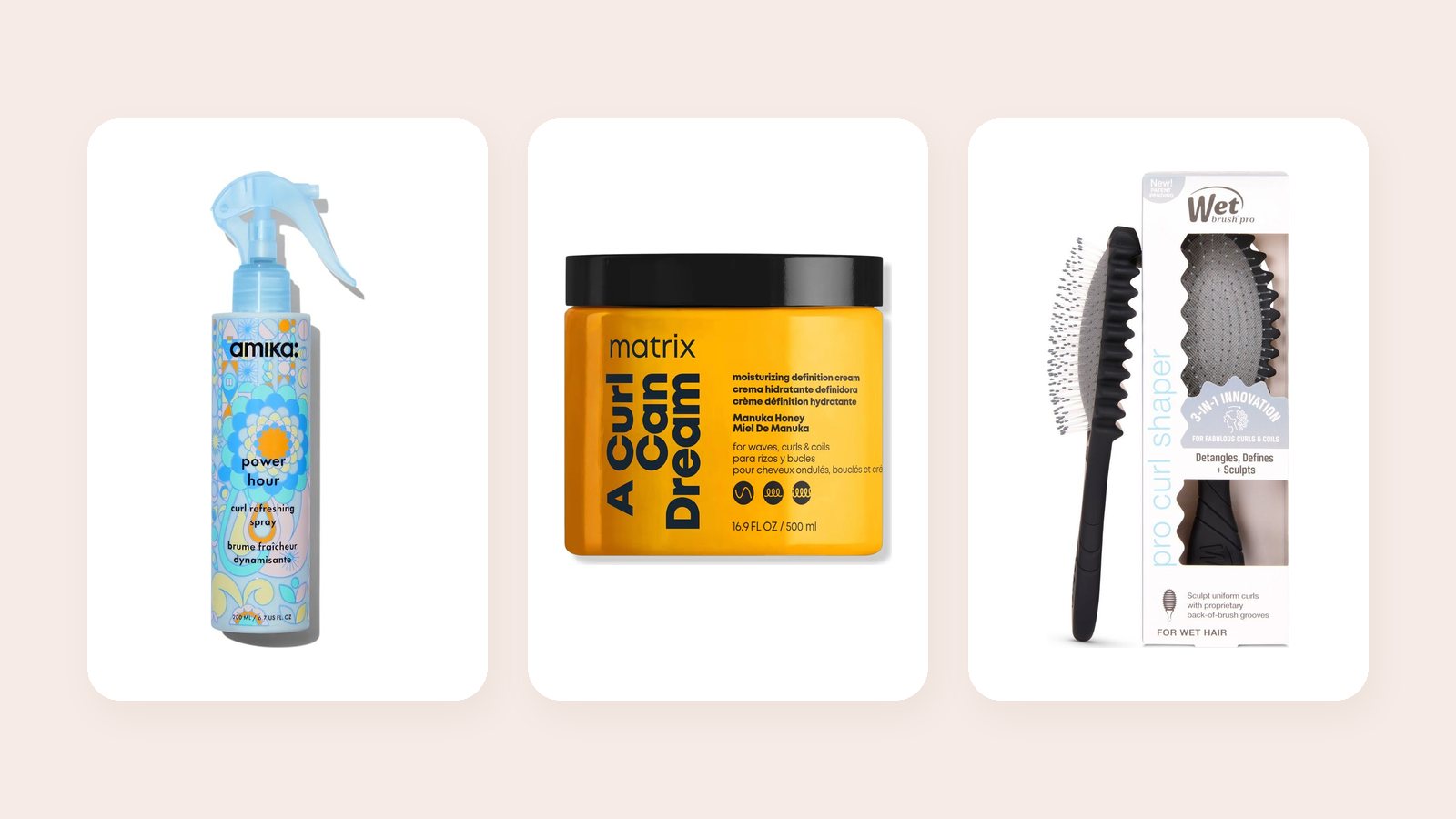
- amika power hour curl refreshing spray: amika says to spritz it through dry hair and scrunch upward, whenever curls need moisture or shape. Keep it away from your eyes.
- Continuous Mist Spray Bottle, “Yummy” print: an empty continuous-mist spray bottle for plain water.
- Wet Brush Pro Curl Shaper: Wet Brush says it detangles, defines and sculpts curls, with IntelliFlex bristles made to glide through wet hair.
- Mizani 25 Miracle Milk Leave-In Conditioner: a leave-in conditioner. Follow the label directions.
- Kenra Curl Defining Creme 5: Kenra says to work 1–2 pumps into damp hair, then diffuse or air-dry.
- Sexy Hair Style Ultra Curl Crème-Gel: SexyHair says to apply it evenly to damp hair, then diffuse for soft curls or air-dry for more definition.
- Matrix A Curl Can Dream Moisturizing Leave-In Cream: Matrix says to apply it after shampoo or co-wash, to soaking-wet hair, then scrunch and air-dry or diffuse.
- Ouidad VitalCurl+ Soft Defining Mousse: Ouidad says to apply it to wet hair from roots to ends, scrunch, then air-dry or diffuse.
- Olaplex Nº.10 Bond Shaper Curl Defining Gel: Olaplex says to apply it to clean, wet hair, air-dry or diffuse, then scrunch out the cast once dry.
Call or text (949) 591-5304 with your list and we will confirm stock and pricing, then pick up at our Westminster store.
Related reading: frizzy hair in humidity, the clarifying shampoo guide and how to use dry shampoo.
FAQ
How do you refresh curls without washing?
Mist flat or frizzy sections with water, add a little leave-in or curl refresher, scrunch upward, and air-dry or diffuse on low heat. Don’t brush them dry (AAD).
Can you brush curly hair when it’s dry?
The AAD says to avoid it, because it can make hair break and frizz. Detangle while hair is wet, with your fingers, a wide-tooth comb or a brush made for curls.
Is it bad to sleep with wet curls?
Cleveland Clinic’s Dr. Khetarpal says wet hair breaks more easily against a pillowcase, and a damp scalp favors yeast and bacteria. Let hair dry first, or use a dryer on low or cool.
Can you mix conditioner and water in a spray bottle?
The AAD advises against it: diluting rinse-off conditioner in a spray bottle can do more damage than good. Use a leave-in made to stay in your hair.
How long can you go without washing curly hair?
The AAD says to wash curly hair at least every 2 to 3 weeks. Cleveland Clinic says at least every two weeks for coarse, coiled or tightly curled hair.
Sources
- American Academy of Dermatology: 6 curly hair care tips from dermatologists (2022), 6 curly hair tips from dermatologists (news release, 2022), Tips for healthy hair (2024) and Dermatologists’ top tips for using leave-in conditioner (2024)
- American Academy of Dermatology: 10 hair care habits that can damage your hair and Black hair: Tips for everyday care
- Cleveland Clinic: How Often Should You Wash Your Hair? (2025) and Should You Avoid Going to Bed With Wet Hair? (2025)
- Gavazzoni Dias MF, Hair cosmetics: an overview, Int J Trichology 2015
- Product directions: amika power hour, Wet Brush Curl Shaper, Kenra Curl Defining Creme 5, SexyHair Style Ultra Curl, Matrix A Curl Can Dream Moisturizing Cream, Ouidad VitalCurl+ Soft Defining Mousse and Olaplex Nº.10 Bond Shaper Curl Defining Gel
This is general information, not medical advice. Follow the directions on each product, keep sprays away from your eyes, and see a board-certified dermatologist for flaking, itching, breakage or thinning that doesn’t improve.