

Gel nail allergy has become a common occupational skin problem for nail techs in many countries. The usual culprit is HEMA and other methacrylates in gel that hasn’t cured yet, getting onto the skin during a service. Once someone is sensitized, it’s usually for life: some techs have had to leave the trade, and others react every time they touch gel. This guide covers what HEMA is, the signs of an allergy, why techs are at risk, whether “HEMA-free” gels are really safer, how to prevent it at the station, and what to do if you react.
Key takeaways
- The allergy starts when uncured gel (wet gel, the sticky layer after curing, or dust from under-cured gel) touches skin. Fully cured gel on the nail plate is not the usual cause.
- HEMA is the most common allergen in nail products, but not the only one. People allergic to HEMA often react to several other methacrylates too.
- Reactions usually appear 1–3 days after contact, not right away, and sensitization usually lasts for life.
- “HEMA-free” doesn’t mean allergy-free: HEMA-free gels still contain other methacrylates.
- Prevention comes down to keeping gel off skin, thin layers, full curing with the lamp the gel maker specifies, and nitrile gloves changed often.
What HEMA is and why it causes allergy
HEMA (2-hydroxyethyl methacrylate) is a methacrylate monomer that forms the film in gel and in liquid-and-powder systems. According to the European Union’s Scientific Committee on Consumer Safety (SCCS), HEMA can make up to 35% of gel systems and up to 10% of liquid-and-powder systems. A survey of 394 nail products sold in Europe found HEMA in nearly 60% of them.
- Only the monomer sensitizes. The British Society for Cutaneous Allergy (BSCA) explains that fully hardened plastic is unlikely to cause problems; the allergy nearly always comes from the small monomer building blocks.
- The SCCS rates HEMA a weak-to-moderate sensitizer, and says human data make it an allergen of concern.
- Cross-reactions: people allergic to HEMA often react to HPMA and EGDMA, two other methacrylates common in nail products. That doesn’t mean every acrylate: reactions to isobornyl acrylate (IBOA) and cyanoacrylates (nail glue) are usually separate allergies. Only patch testing shows what a particular person reacts to.
Signs and timing
- Signs: redness, itching, burning and blisters on the fingertips and around the nails; nails may loosen or separate from the nail bed. Because hands touch the face, the rash can spread to the eyelids, face and neck. The British Association of Dermatologists (BAD) notes that breathing problems are very rare.
- Timing: allergic contact dermatitis usually appears 24–72 hours after contact, not during the service, which is why many people don’t connect it to gel.
- Techs react early: a study of 11 European dermatology clinics (2013–2015) found that 65% of occupational acrylate cases developed during the first year at work, and at least 11.7% of occupational cases had to leave their jobs.
- Usually lifelong: the California Board of Barbering and Cosmetology’s fact sheets warn that once you become sensitive to a chemical, you will react every time you use it. The good news is that avoidance works: in an Amsterdam study of 67 patients, the dermatitis cleared completely in 80% once they avoided acrylate products.
An acrylate allergy can matter outside the salon too. BAD warns that the same or very similar methacrylates are used in white dental fillings, bone cement for joint replacements, glucose sensors and insulin pumps, so sensitization can complicate future dental and medical care. The BSCA adds that hardened materials already in place, such as fillings or hip cement, are very unlikely to cause problems and don’t need to be removed. The practical advice: tell your dentist and doctors about the allergy.
Why nail techs are at risk
The SCCS says the risk of HEMA sensitization is “considerably higher” for professionals when protective measures are neglected, and that wiping off excess product with unprotected fingers is likely to happen. In the European study above, 56.6% of nail-acrylate allergy cases were occupational. The main causes:
- Uncured gel on skin: gel flooding onto the skin around the nail, getting on fingers while wiping a brush, or wiping excess gel or the sticky layer with bare fingers.
- Under-curing: BAD advises using the lamp the gel maker recommends and not using one lamp for other brands’ gels, because the wrong lamp can leave gel under-cured. Reviews also point to overly thick layers and too-short curing times.
- The sticky layer and filing dust: the tacky layer left after curing is unreacted material, and so is dust from under-cured gel. Touching it with bare skin puts monomer on the skin.
Published numbers come from people referred for patch testing, not from all nail techs. In the UK, 1.7% of 5,920 patients tested in 2016–2017 were positive to HEMA. In the U.S. and Canada, 3.2% of patients tested in 2019–2020 were positive to HEMA, according to a 2023 review. We found no U.S. figures specifically for nail techs.
Compiled from the British Association of Dermatologists, the EU’s SCCS, France’s ANSES, the California Board and dermatology reviews.
- Leave a small gap between the gel and the skin around the nail. If gel touches the skin or sidewalls, wipe it off right away, before curing.
- Apply thin layers. Cure for the full time under the lamp the gel maker specifies; don’t use one lamp for other brands’ gels.
- Never touch the sticky layer or filing dust with bare skin. Wipe up spills and brush residue right away, with gloves on.
- Wear nitrile gloves and change them often: BAD advises every 30 minutes, removed without touching bare skin, and right away if torn or contaminated. Latex and vinyl gloves don’t protect.
- Keep bottles closed. Use a vented table or source capture; don’t rely on fans.
- Don’t eat or drink at the station. Wash your hands after work, even if you wore gloves.
- Never put gel on your own or a client’s skin to “test for allergy”: it can cause a new allergy.
Not medical advice. Follow the gel and lamp makers’ instructions.
How much gloves help
No thin disposable glove blocks methacrylates completely:
- The Finnish Institute of Occupational Health (FIOH) tested gloves against nail gel: thin nitrile and PVC held for about 5 minutes and neoprene for about 20 minutes. Acrylic liquid went through disposable gloves very quickly.
- BAD says latex and vinyl gloves give no protection against these chemicals and recommends nitrile, changed every 30 minutes. That’s a change interval, not a measured protection time.
- France’s ANSES adds that acetone and removers weaken nitrile, so change gloves often during soak-offs too.
Gloves are one layer of protection. The most important step is still keeping uncured gel off skin. See our guide to latex vs nitrile vs vinyl gloves.
Are “HEMA-free” gels safe?
“HEMA-free” is a marketing claim, not a standard. EU rules restrict only HEMA and di-HEMA TMHDC, not other methacrylates. As for “hypoallergenic,” the FDA says there are no federal standards or definitions for the term; it means whatever a company wants it to mean.
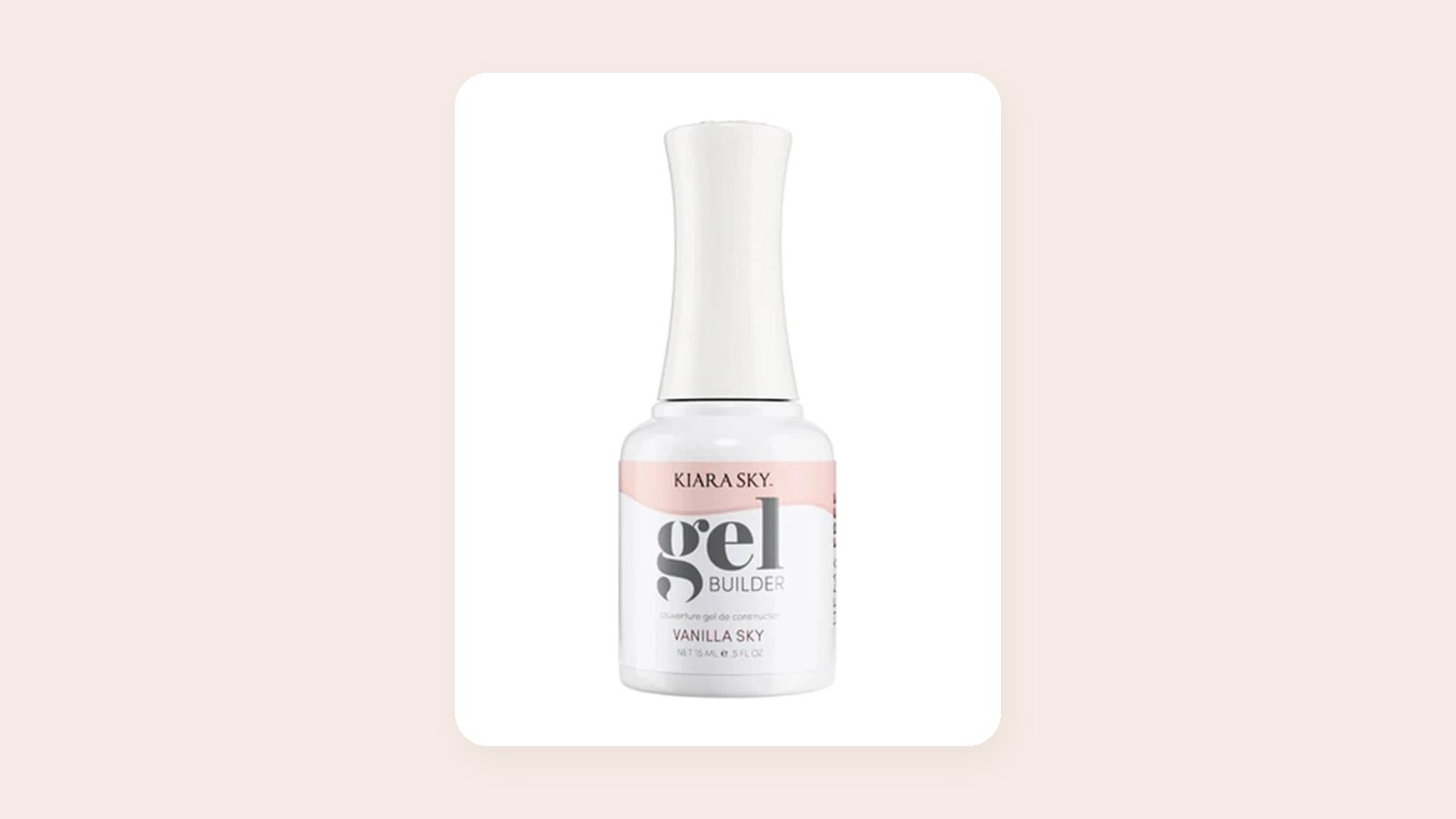
A concrete example: Kiara Sky’s Safety Data Sheet (SDS) for its HEMA-free Gel Builders, dated July 11, 2025, lists benzyl methacrylate (25–50%) and ethylene glycol dimethacrylate (EGDMA, 10–25%), and classifies the product as a Category 1 skin sensitizer with the warning “May cause an allergic skin reaction.” The SDS also advises that people with a history of skin sensitization should not work with the product. And EGDMA is one of the methacrylates that cross-reacts most strongly with HEMA. In practice:
- Removing HEMA removes the single most common nail allergen, which may lower one risk.
- But a HEMA-free gel can still sensitize new users, and people already allergic to HEMA may still react to it.
- Prevention stays the same: keep gel off skin and cure it fully under the right lamp.
Labels aren’t always accurate either. FIOH analyzed 37 gel and acrylic products: every one showed differences between the label and the lab results, and HEMA was often undeclared. OSHA advises reading labels and SDSs even for products labeled “free” of a chemical.
Rules on HEMA
- California: there’s no HEMA-specific rule, and we found no Board material on gel allergy. The Board’s Manicuring fact sheet lists ethyl methacrylate as causing eye, skin and respiratory tract irritation and skin sensitization. California’s Health and Safety Code § 110371 requires professional cosmetics made on or after July 1, 2020 to carry the same labeling as retail cosmetics, so techs can read the ingredients and check for HEMA and other methacrylates.
- European Union: under Regulation (EU) 2020/1682, nail products containing HEMA or di-HEMA TMHDC are for professional use only and must be labeled “For professional use only” and “Can cause an allergic reaction,” effective in 2021. It’s a restriction, not a ban, and an Italian study still found HEMA positivity rising from 1.6% in 2019 to 2.7% in 2023.
- United States: there’s no HEMA-specific restriction. In 2023 the Cosmetic Ingredient Review (CIR) Expert Panel concluded that 22 methacrylates, including HEMA, are safe as used in nail enhancement products when skin contact is avoided. The American Contact Dermatitis Society named acrylates its Contact Allergen of the Year in 2012.
What to do if you react
- Stop the exposure. Remove the gel and stop working with the suspected product.
- See a dermatologist for patch testing with an acrylate series. Under the European Society of Contact Dermatitis guideline (2026), patches stay on for 2 days, a reading on day 3 or 4 is required, and acrylates need an extra reading around day 7. The common T.R.U.E. test panel contains no acrylates, so ask for an acrylate series. Bring product names, labels and SDSs.
- Tell your employer. The Board says employers must provide SDSs on request and train staff about chemical hazards; employees can file a complaint with Cal/OSHA.
- Tell your dentist and doctors about the acrylate allergy before dental work or procedures.
- Report it to the FDA after telling your doctor, as the FDA’s nail care products page advises for reactions to nail products.
For clients who are allergic to acrylates, a 2023 dermatology review suggests regular nail polish (no lamp) as the safest option, though regular polish has allergens of its own.
At OBB
- OBB Core Gel System: Adhesive Base Coat, Adhesive Extend Glue Gel, Builder Clear Gel and Crystal Top Coat, 15 ml each, UV/LED cure, soak-off. OBB Gel says all four are HEMA-free and TPO-free. As explained above, HEMA-free gels can still cause allergies, so keep uncured gel off the skin.
- Kiara Sky HEMA-Free Gel Builder – Vanilla Sky (GCB02): a self-leveling peachy nude builder gel for structure and extensions, 15 mL. Kiara Sky says to cure each layer for 60 seconds under an LED lamp and marks the product for professional use only. As noted above, the maker’s SDS lists other methacrylates and a skin-sensitizer warning.
- CND Pro Essentials Offly Fast: a moisturizing remover that, per the product page, removes Shellac, lacquer, acrylic and tips. Wear gloves during removal and change them often.
Call or text (949) 591-5304 with your list and we will confirm stock and pricing.
Related reading: nail glue safety, MMA vs EMA acrylic liquid, latex vs nitrile vs vinyl gloves, paraffin wax safety and California pedicure spa cleaning requirements.
FAQ
How long does it take to become allergic to gel?
It varies from months to years. A European study found 65% of occupational cases developed in the first year at work. Every time uncured gel touches skin is another chance to become sensitized.
Will the allergy go away if I take a break?
The rash heals with a break, but sensitization is usually lifelong: working with the same chemicals again brings the reaction back.
Can I switch to HEMA-free gel and stop worrying?
No. HEMA-free gels still contain other methacrylates that can sensitize and cross-react with HEMA. If you’re already allergic, see a dermatologist and get patch tested before working with gel again.
Do LED lamps cause gel allergy?
The lamp itself doesn’t. The problem is under-cured gel from the wrong lamp or too little curing time. Use the lamp the gel maker specifies and cure for the full time.
Are nitrile gloves enough?
Not on their own. Thin nitrile holds back gel for only a few minutes. Change gloves often, and above all keep uncured gel off skin.
Sources
- British Association of Dermatologists, 2018 warning and 2023 warning; British Society for Cutaneous Allergy, Acrylates
- European Commission, SCCS, opinion on HEMA and di-HEMA TMHDC (2018); Regulation (EU) 2020/1682
- FDA, Nail Care Products and “Hypoallergenic” Cosmetics; California Health and Safety Code § 110371
- California Board of Barbering and Cosmetology, Licensee Fact Sheet 10: Manicuring and Licensee Fact Sheet 5: Artificial Nails; OSHA, Chemical Hazards in Nail Salons; ANSES, report on nail care work (2017, in French)
- Kiara Sky, Gel Builders HEMA-Free SDS (2025)
- Studies: Gonçalo et al., Contact Dermatitis 2018; Rolls et al., Br J Dermatol 2019; Steunebrink et al., market survey 2024 and Amsterdam cohort 2024; Suuronen et al. (FIOH), Contact Dermatitis 2024; de Groot and Rustemeyer, Contact Dermatitis 2024; Caroppo et al., Contact Dermatitis 2025; Yu and Adler, Cutis 2023; ESCD patch test guideline, Contact Dermatitis 2026
This is a plain-language guide for nail professionals, not medical advice. If you suspect an allergy, see a dermatologist. Follow the gel and lamp makers’ instructions.