

Acrylic liquid (monomer) mixed with powder makes an acrylic enhancement. Two monomers come up again and again: EMA (ethyl methacrylate), the main monomer in most acrylic liquids today, and MMA (methyl methacrylate), a cheaper monomer that is prohibited in California salons. This guide compares the two, summarizes California and federal law, lists the warning signs of MMA, and covers how to handle acrylic liquid safely.
Key takeaways
- In California, salons and schools may not have MMA monomer on the premises (16 CCR § 989(b)). The establishment license holder is fined $500 per violation, and the fine can’t be waived.
- No federal regulation bans MMA. The FDA concluded that liquid MMA is a poisonous and deleterious substance for nail products and went to court in 1974 to pull 100% liquid MMA products off the market.
- EMA is legal and by far the most common, but not risk-free: it can irritate and sensitize skin, and it’s flammable.
- MMA can only be spotted by warning signs: a very strong odor, very hard enhancements that are difficult to file and won’t soak off, and an unusually low price. Only lab testing confirms it.
- Safe handling: a vented table, small closed bottles, pour only what you need, keep liquid off skin, and seal soaked wipes in a bag.
How MMA and EMA differ
| EMA | MMA | |
|---|---|---|
| Chemical name, CAS number | Ethyl methacrylate, 97-63-2 | Methyl methacrylate, 80-62-6 |
| Where it’s used | The main monomer in most acrylic liquids (NIOSH, CIR) | Some cheap acrylic liquids; also dentistry and bone cement, under controlled conditions |
| California law | Allowed | Prohibited on salon and school premises (§ 989(b)) |
| Main risks | The Board lists eye, skin and respiratory tract irritation and skin sensitization; flammable | The Board warns the enhancement can bond so strongly the nail bed may tear away under extreme pressure; severe allergic reactions; infections through breaks in the nail |
| Removal | Soaks off with acrylic removers | Very hard or impossible to soak off (Arizona and South Dakota boards) |
The California Board of Barbering and Cosmetology’s August 6, 2014 industry bulletin says MMA “can be identified by its very strong fruity odor.” The EPA notes that liquid MMA doesn’t bond well to the natural nail without heavy filing with coarse abrasives, which can damage the nail. South Dakota’s Cosmetology Commission adds that MMA enhancements are so rigid they resist breaking, which often leads to painful breaks of the natural nail near the cuticle and possible serious infection.
Note that California prohibits MMA monomer, the liquid. Acrylic powders normally contain polymers such as PMMA, and the EPA says MMA polymer powders are considered safer than the liquid because they don’t penetrate the skin. Seeing “methyl methacrylate” on a powder label doesn’t make the powder illegal.
What California and federal law say
- 16 CCR § 989(b): no establishment or school may have methyl methacrylate monomer (or methylene chloride) on the premises. The wording has been in the rule since the amendment that took effect July 1, 2015. Under the fine schedule (§ 974), a § 989 violation is $500 for the first, second and third violation, charged to the establishment license holder, and not waivable.
- Board publications: the 2014 industry bulletin says products containing MMA are prohibited for use in Board-licensed establishments, and the Board’s 2025 Manicuring brochure lists using products that contain MMA among the things a manicurist cannot do.
- DTSC, 2026: California’s Department of Toxic Substances Control listed nail products containing more than 1,000 ppm (0.1%) MMA as a Priority Product, effective April 1, 2026. Manufacturers had to notify DTSC by June 1, 2026, with the next filing due by September 28, 2026. DTSC notes that MMA is still detected in the air of California nail salons and that MMA can be a contaminant in EMA products.
- Federal: the FDA states that no regulation specifically prohibits MMA monomer in cosmetics. It concluded that liquid MMA is a poisonous and deleterious substance that shouldn’t be used in fingernail preparations, and in the 1970s it used court proceedings to remove products containing 100% MMA monomer. Saying “the FDA banned MMA” isn’t accurate.
- Other states prohibit it in different ways: Florida and Ohio bar liquid nail monomer containing “any trace” of MMA; Texas and New York prohibit using MMA monomer; Washington prohibits “100% liquid” MMA products.
How to spot MMA
Warning signs cited by the California Board and other state boards:
- Odor: very strong and fruity, unlike other acrylic liquids.
- Hardness: very hard and rigid enhancements that are very difficult to file, even with coarse abrasives.
- Removal: won’t soak off in normal acrylic removers.
- Price: unusually cheap; Arizona’s board cites roughly a third of the price.
- Label and SDS: read the ingredients on the label and the Safety Data Sheet. MMA’s CAS number is 80-62-6; EMA’s is 97-63-2. California’s § 988(b) also requires every bottle and container in the salon to be labeled with its contents.
These are warning signs, not proof. EMA has an odor too, so smell alone can’t tell you. “No MMA” on a label is the manufacturer’s claim; an SDS may not list ingredients under 1%, and DTSC says MMA can be a contaminant in EMA products. Only lab testing confirms what’s in a bottle.
Compiled from the California Board, OSHA, NIOSH, the EPA and France’s ANSES.
- Use a vented nail table that exhausts outdoors, with the intake close to where you work. Regular fans just blow dust and vapors around the room.
- Keep liquid in small, narrow-mouth, labeled bottles. Pour only what you need and close bottles when not in use (§ 988).
- Keep liquid off skin. Methacrylates pass quickly through latex and vinyl; nitrile does better but doesn’t give full protection, so change gloves often.
- Put soaked cotton and wipes in a sealed bag, then in a trash can with a self-closing lid; empty it often. Never pour liquid down the drain or onto cotton balls to evaporate.
- Dust masks, including N95s, only stop dust when filing. They don’t stop chemical vapors.
- EMA is flammable: no smoking in the salon, and keep it away from heat.
- Don’t eat or drink at the station; wash your hands before eating.
Follow the label and SDS of the product you use. Not legal advice.
Is EMA safe?
EMA is legal and the standard monomer for acrylics, but no agency calls it safe without conditions:
- The Cosmetic Ingredient Review (CIR) Expert Panel concluded EMA is safe as used when application comes with directions to avoid skin contact, because it can sensitize skin.
- The California Board’s Manicuring fact sheet lists ethyl methacrylate as causing eye, skin and respiratory tract irritation and skin sensitization; its Artificial Nails fact sheet adds that it’s a fire hazard.
- DTSC notes that EMA is in the same chemical class as MMA, with similar properties and hazard traits, and that DTSC has not vetted EMA.
- OSHA and NIOSH have not set occupational exposure limits for EMA. No limit doesn’t mean no hazard.
People who are allergic to acrylates can react to several different methacrylates. See our guide to gel nail allergy and HEMA.
At OBB
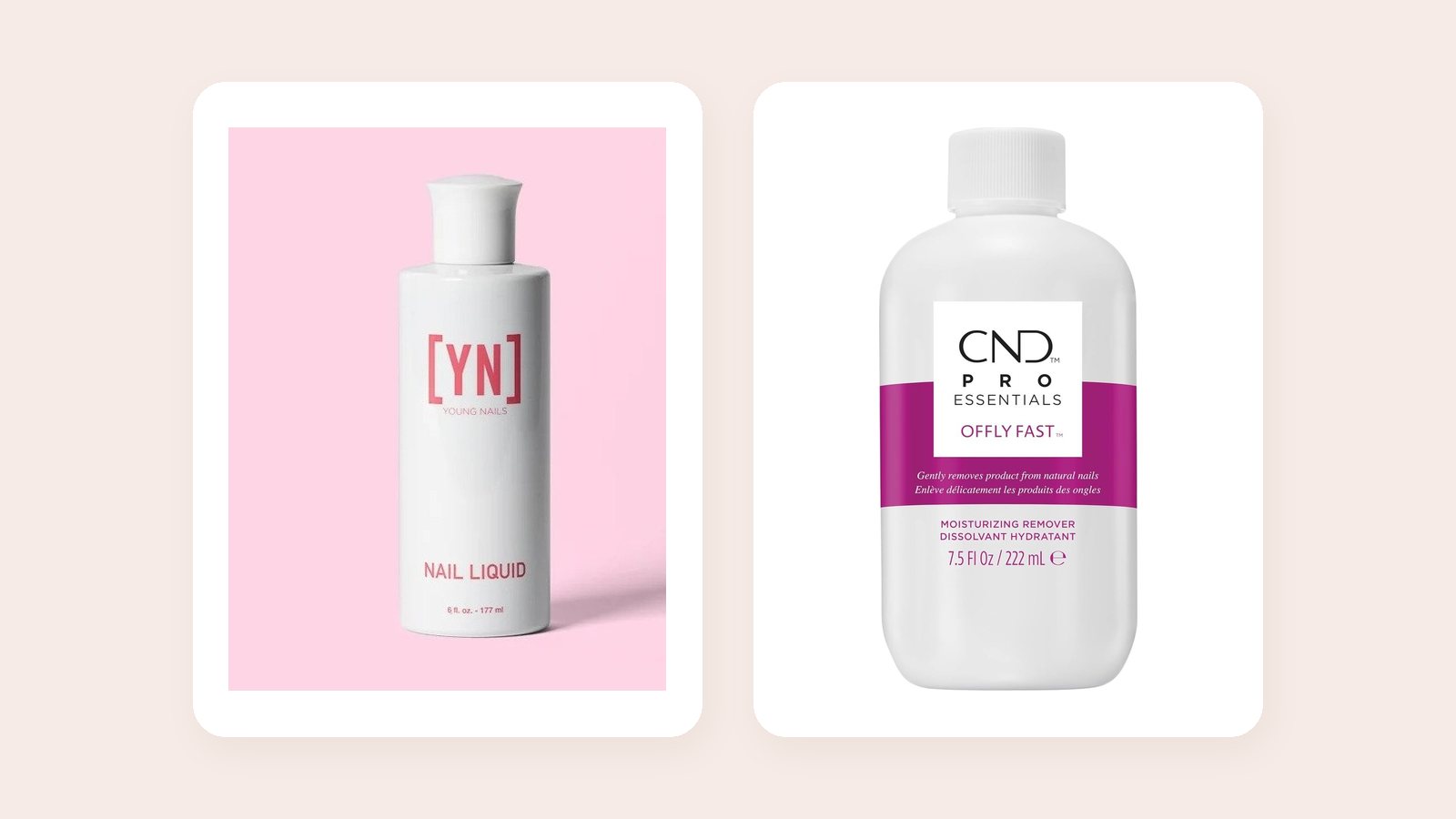
- Young Nails Nail Liquid (Monomer): 6 fl oz (177 mL), SKU NL06000, for use with Young Nails powders. Young Nails describes it as low-odor and MMA-free.
- CND Pro Essentials Offly Fast: a moisturizing remover that, per the product page, removes Shellac, lacquer, acrylic and tips.
Call or text (949) 591-5304 with your list and we will confirm stock and pricing.
Related reading: nail glue safety, gel nail allergy and HEMA, latex vs nitrile vs vinyl gloves and the nail file grit guide.
FAQ
Can California nail salons use MMA acrylic liquid?
No. Under 16 CCR § 989(b), salons and schools may not have MMA monomer on the premises at all, used or not. The establishment license holder is fined $500 per violation.
Did the FDA ban MMA?
No federal regulation specifically bans MMA. The FDA considers liquid MMA poisonous and deleterious for nail products and took court action in 1974 against 100% liquid MMA products. The on-premises ban is California law, and many other states have their own.
Is EMA safe?
EMA is legal and widely used, but it can irritate and sensitize skin, and it’s flammable. Use it with a vented table, keep it off skin and keep bottles closed.
How can I be sure a liquid has no MMA?
You can’t be certain from smell or hardness. Buy clearly labeled products from established brands, read the label and SDS, and use lab testing if you need certainty.
Is a powder with “methyl methacrylate” on the label illegal?
California prohibits MMA monomer, the liquid. Powders normally contain polymers such as PMMA; the EPA considers polymer powders safer than the liquid because they don’t penetrate the skin.
Sources
- California Board of Barbering and Cosmetology, Article 12 (16 CCR §§ 977–995); 16 CCR § 974 and § 989
- Board: Industry Bulletin: Methyl Methacrylate Monomer (MMA) (2014), Manicuring (2025), Licensee Fact Sheet 10 and Licensee Fact Sheet 5
- DTSC, Nail Products Containing MMA (Priority Product, 2026)
- FDA, Nail Care Products and Prohibited Ingredients
- OSHA, Chemical Hazards in Nail Salons; NIOSH, Controlling Chemical Hazards During the Application of Artificial Fingernails; EPA, Protecting the Health of Nail Salon Workers (2007)
- Arizona State Board of Barbering and Cosmetology, Methyl Methacrylate: what to know (2023); South Dakota Cosmetology Commission, Warning About Use of MMA; ANSES, report on nail care work (2017, in French)
- Cosmetic Ingredient Review, safety assessment of ethyl methacrylate (2002)
This is a plain-language guide for salon owners, not legal or medical advice. Check the current regulations at barbercosmo.ca.gov.