

Here is how to get nail polish out of clothes: blot or scrape off as much as you can right away, then dab nail polish remover through the back of the fabric onto paper towels until no more color comes out. Test the remover on a hidden spot first, and never use acetone on acetate, triacetate or modacrylic fabric. Carpet, upholstery, wood and plastic each need different care, covered below.
Key takeaways
- Act before it dries: blot or scrape, and don’t rub.
- Test remover on a hidden spot. The American Cleaning Institute rules it out on acetate and triacetate; extension guides add modacrylic.
- On carpet, put remover on a white cloth, never straight on the rug, so solvent can’t reach the backing.
- Check the upholstery cleaning code: W means no solvents, X means no liquids.
- Keep acetone off finished wood and acrylic, and use it with a window open, away from flames.
Wet or dried nail polish: what to do first
Nail polish is made of nitrocellulose and pigments, and acetone dissolves nitrocellulose, Poison Control explains. That’s why remover works. Still, the American Cleaning Institute (ACI) warns that polish may be impossible to remove, so speed matters:
- Act while it’s wet. The Carpet and Rug Institute (CRI) warns that delay can make a spill permanent, and the University of Georgia (UGA) Extension says carpet results are best before the polish dries.
- Lift, don’t spread. Blot with a white cloth or paper towel. Scrape up blobs with a rounded spoon, as CRI suggests, or the dull edge of a knife or card, as UGA does.
- Don’t rub. The University of Kentucky Extension warns that rubbing can spread a stain and damage fibers.
- Dried polish: scrape gently first. Caesarstone lists nail polish among dried spills to lift off its quartz with a plastic putty knife, and UGA says hardened polish on tile can sometimes be carefully scraped off with a razor blade.
Acetone or non-acetone nail polish remover?
Most nail polish remover is acetone, Poison Control says. Acetone-free removers contain other chemicals instead, such as ethyl acetate, butyl acetate or alcohols, and some removers add moisturizers such as mineral oil or lanolin. Here is how the guides handle that:
- Fabric: Kentucky and Georgia call for a non-oily remover. Texas A&M AgriLife Extension says acetone remover can be used on washable fabrics except acetate, triacetate and modacrylic, and that non-acetone removers should be tested on all fabrics first.
- Carpet: CRI’s tips page suggests a non-acetone remover, while its Spot Solver lists both kinds and says to treat acetone like a dry-cleaning solvent. UGA adds that remover isn’t pure acetone, and its other ingredients can make a stain worse.
- Nails: Poison Control suggests a remover with a moisturizer to limit nail dryness. Keep moisturizing salon removers for nails, not stains.
How to get nail polish out of clothes
Check the fiber label first; the FTC requires most clothing to list each fiber by its generic name. Skip remover on acetate, triacetate or modacrylic: Kentucky says acetate fabric dissolves in acetone, and UGA says acetone turns acetate and triacetate to froth. Take those and “dry clean only” items to a dry cleaner and point out the stain; Kentucky sends leather and suede to a leather specialist.
For other washable fabrics, follow ACI’s method:
- Test the remover on a seam or other hidden spot.
- Lay the stain face down on clean paper towels.
- Dab remover onto the back of the stain. Texas A&M finds an eyedropper useful.
- Replace the paper towels often, so polish doesn’t transfer back.
- Repeat until no more color comes out, then rinse and launder as the label directs.
Don’t put a remover-soaked item straight into the washer or dryer: Texas A&M says to rinse out the solvent or let it evaporate completely first. ACI adds that the dryer should wait until the stain is gone.
How to get nail polish out of carpet
CRI’s Spot Solver gives these steps:
- Blot wet polish with a dry white cloth and gently scrape up the rest.
- Test the remover on a hidden spot for color transfer or damage.
- Put a small amount on a white cloth. Never pour solvent onto carpet or let it reach the backing: CRI says it can damage the latex that holds the backings together.
- Work gently from the edges toward the center, let it sit a few minutes and blot. Repeat while polish transfers to the cloth.
- Finish with 1/4 teaspoon of liquid dishwashing detergent in 1 cup of lukewarm water, then rinse with water and blot dry. CRI warns that leftover residue can attract soil.
UGA warns that acetone makes acetate and triacetate carpet froth immediately, and that solvents can destroy carpet backing. If you don’t know the fiber, or the spot won’t lift, call a professional: CRI says pros can use more aggressive solutions, and it lists Seal of Approval service providers.
Nail polish on upholstery: check the cleaning code
The FTC’s fiber-labeling rules don’t cover the outer fabric of upholstered furniture, so the cleaning-code tag is your guide. La-Z-Boy’s care guide explains the codes:
- W: water-based cleaner only, no solvents. Remover is a solvent, so call an upholstery cleaner.
- S: water-free dry-cleaning solvent only, no water.
- W-S: water or solvent. La-Z-Boy allows an over-the-counter solvent cleaner for heavier oil-based stains, after a hidden-spot test.
- X: vacuum or brush only, no liquid cleaners.
On S or W-S fabric, test, then dab a little solvent on with a cloth without soaking the fabric; UGA warns solvents can destroy upholstery foam. UGA uses non-oily acetone remover on cotton, linen, acrylic, nylon, olefin and polyester upholstery, but not on acetate, triacetate or modacrylic. On vinyl, act fast: UGA says polish and remover both damage vinyl permanently if left on. For leather, La-Z-Boy recommends a professional leather cleaner for difficult stains.
Nail polish on wood, plastic, countertops and floors
- Finished wood furniture: don’t use remover. UGA says acetone quickly damages the finish; it softens the polish by rubbing with a cloth wet with mineral spirits instead. Test first.
- Wood and vinyl floors: UGA says polish can quickly damage these surfaces. Scrape up the excess without spreading it, then sponge lightly with mineral spirits. UGA warns that remover may affect vinyl.
- Acrylic plastic and tubs: ACRYLITE, an acrylic sheet maker, says acetone can weaken acrylic and cause fine surface cracks called crazing. American Standard says nail polish remover and acetone must not touch its acrylic tubs.
- Laminate counters: Wilsonart allows nail polish remover on stubborn stains for up to 2 minutes, then a thorough rinse. Formica lists acetone for tough stains and stresses removing all cleanser afterward.
- Quartz: Caesarstone says to lift dried polish with a plastic putty knife and wipe with a damp cloth. It warns that strong chemicals and solvents can permanently damage its surfaces.
- Marble: UGA’s method for marble floors is to wipe up the excess, wipe with a cloth dampened with acetone remover, then rinse and dry. For stains that remain, the Natural Stone Institute recommends a stone professional.
Compiled from ACI, the Kentucky, Georgia and Texas A&M extension guides, CRI, La-Z-Boy, ACRYLITE and American Standard.
- Acetate, triacetate and modacrylic fabric
- Carpet backing and upholstery foam: never pour it on or let it soak through
- Upholstery coded W or X
- Finished wood furniture
- Acrylic plastic and acrylic tubs
- Vinyl, unless necessary, and never left on
Even where acetone is allowed, test a hidden spot first.
Acetone safety and when to call a pro
Acetone evaporates easily and is flammable, says the CDC’s Agency for Toxic Substances and Disease Registry (ATSDR). The FDA warns that some nail products can catch fire near a stove’s pilot light, a lit cigarette or a hot curling iron.
- Ventilate. ATSDR says to open a window if you spill acetone, and Poison Control says to use remover in a well-ventilated area.
- No flames or sparks. Cornell Cooperative Extension says to use solvents where appliances or fans can’t spark, and never near an open flame or pilot light.
- Protect skin and eyes. ATSDR says acetone can dry, irritate and crack skin. Poison Control says to wash remover off skin with soap and water and to flush eyes with water for 10 to 15 minutes.
- Store it safely. Poison Control says to keep remover up, away and out of sight of children.
If someone swallows remover or has symptoms, call Poison Control at 1-800-222-1222. Call a professional cleaner for dry-clean-only items and acetate, triacetate or modacrylic fabric; for large stains, bulky items or fragile fabric, as Kentucky advises; for W- or X-code upholstery, leather and suede; and for carpet of unknown fiber or a spot that won’t lift.
At OBB
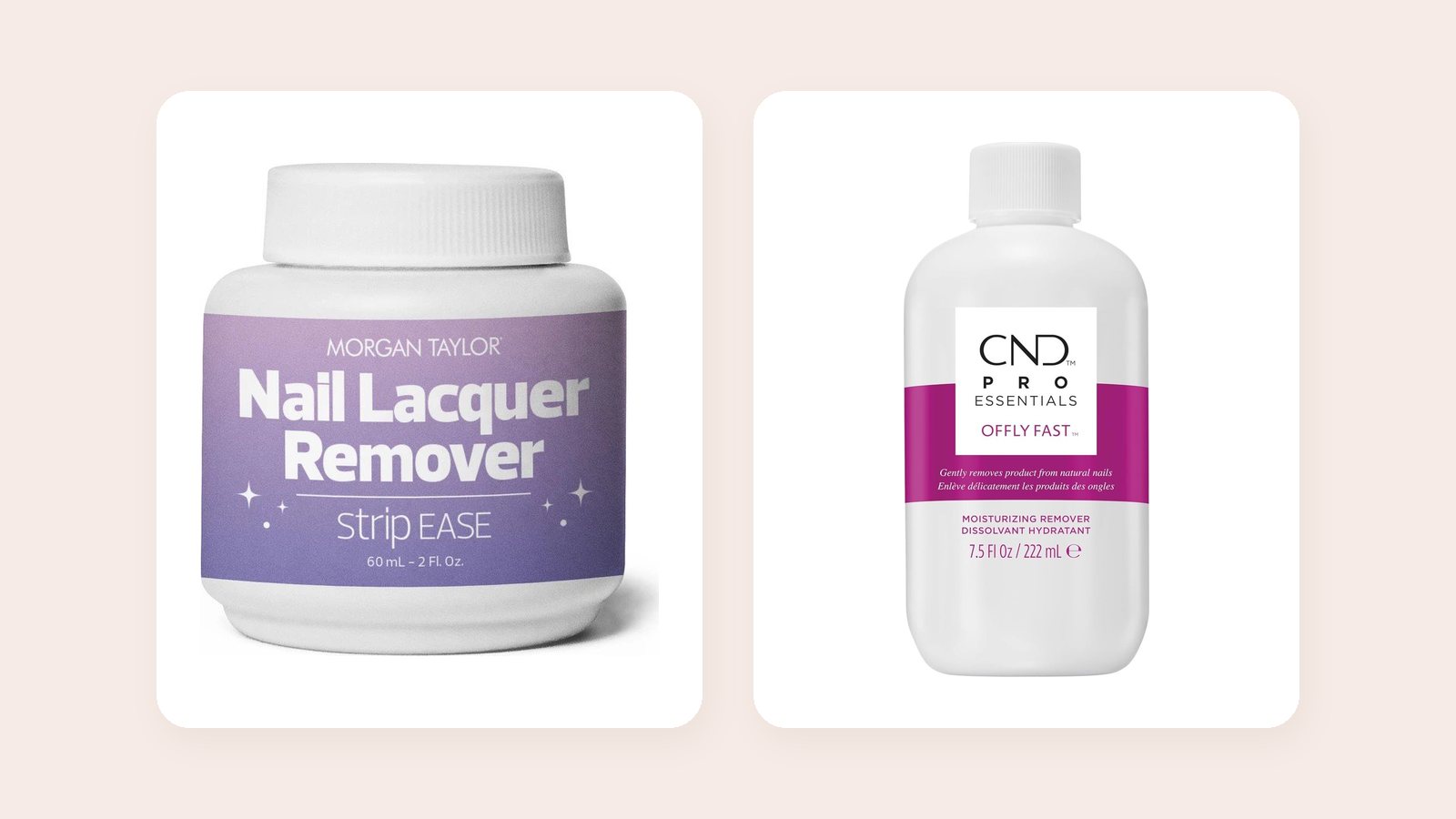
- Morgan Taylor Strip Ease Nail Lacquer Remover (jar): a dip-in jar lacquer remover for nails, not for fabric or furniture.
- CND Pro Essentials Offly Fast Moisturizing Remover: a moisturizing remover that, per the product page, removes Shellac, lacquer, acrylic and tips. For nails only.
Call or text (949) 591-5304 with your list and we will confirm stock and pricing, then pick up at our Westminster store.
Related reading: Why Your Nail Polish Chips, How to Protect Your Nails During Work, Cleaning, and Daily Life and Latex vs Nitrile vs Vinyl Gloves.
FAQ
Is acetone safe on cotton and polyester?
Texas A&M says acetone remover can be used on washable fabrics that don’t contain acetate, triacetate or modacrylic, and UGA uses it on cotton and polyester upholstery. Test a hidden spot for color change first.
Is non-acetone remover safer for fabric?
Not necessarily. Poison Control notes that acetone-free removers contain other chemicals, such as ethyl acetate or alcohols, and Texas A&M says to test them on all fabrics before use.
How do you get dried nail polish out of carpet?
Scrape up what you can, then follow CRI’s steps: a little remover on a white cloth, worked from the edges in, never poured on. If it won’t lift, call a professional carpet cleaner.
Will nail polish remover damage a wood table?
It can. UGA says acetone will quickly damage a wood finish and softens polish with mineral spirits instead, after a hidden-spot test.
Can I use my salon remover on a stain?
Keep salon removers such as Strip Ease and Offly Fast for nails. Extension guides call for a plain, non-oily remover on fabric, tested first.
Sources
- American Cleaning Institute, Stain Removal Guide
- Texas A&M AgriLife Extension, Removing Stains from Washable Fabrics
- University of Kentucky Extension, Stain Removal for Washable Fabrics
- University of Georgia Extension, Remove Stains From Fingernail Polish, Lacquer
- Cornell Cooperative Extension Tompkins County, Removing Stains at Home
- Carpet and Rug Institute, Spot Solver: Fingernail Polish and Simple Stain Removal Tips and Tricks
- Federal Trade Commission, Labeling Requirements Under the Textile and Wool Acts
- La-Z-Boy, Fabric and Leather Care
- ACRYLITE, Clean, Disinfect and Maintain ACRYLITE Acrylic Sheet; American Standard, acrylic bath care instructions
- Wilsonart, Laminate Care & Maintenance; Formica, Cleaning Formica Products
- Caesarstone, Residential Care and Maintenance; Natural Stone Institute, Care & Cleaning of Natural Stone
- Poison Control, Nail polish and glue removers
- FDA, Nail Care Products; ATSDR, ToxFAQs for Acetone
This is general cleaning information, not professional or medical advice. Follow care labels and your furniture, carpet and countertop makers’ instructions first, test a hidden spot, and never mix cleaning products. If someone swallows remover or has trouble breathing, call Poison Control at 1-800-222-1222 and get medical help.