

Good beard care starts with the skin underneath: wash your face and beard every day with a gentle cleanser, then moisturize the skin and the hair with beard oil, beard conditioner or a moisturizer. Trim with clean, well-kept tools, and when you shave the edges, shave in the direction your hair grows to lower the risk of razor bumps. Here is what the American Academy of Dermatology (AAD) and Mayo Clinic advise.
Key takeaways
- Wash your face and beard every day with a gentle cleanser, rinse with lukewarm water and pat dry (AAD).
- Moisturize right after washing: beard oil for normal to dry skin, beard conditioner for acne-prone skin, a fragrance-free moisturizer for sensitive skin (AAD).
- Test a new beard product on a small patch of skin for 7 to 10 days. The AAD lists fragrance among the most common causes of allergic skin rashes.
- Clean your trimmer after each use as its manual directs, and don’t share razors.
- Shave with the grain, don’t stretch your skin and rinse the blade after every swipe (AAD).
- See a dermatologist for razor bumps that keep coming back, a rash that won’t clear, or a lump that changes.
How to wash your beard and the skin under it
Dirt, oil, germs and dead skin cells build up in a beard every day and can clog pores, says dermatologist Anthony Rossi, MD, in advice published by the AAD. His routine:
- Wash your face and beard every day with a gentle cleanser made for your skin type, not soap. The AAD says a cleanser removes dirt without drying the skin under your beard.
- Massage it in with circular motions, reaching both the beard and the skin.
- Rinse well with lukewarm water.
- Pat dry with a clean towel, leaving the skin a little damp for the next step.
For oily or acne-prone skin, the AAD suggests a non-comedogenic gel cleanser with salicylic or glycolic acid; for dry or sensitive skin, a fragrance-free one. And keep your hands off: touching your beard spreads germs from your hands to your face.
What does beard oil do, and do you need it?
Beard oil is one way to moisturize. The AAD says moisturizing softens the skin and beard hairs; without it, the skin under a beard can get dry, flaky and itchy. Dr. Rossi matches the product to your skin:
- Normal to dry skin: beard oil.
- Acne-prone skin: beard conditioner. For breakouts under the beard, the AAD suggests a small amount of non-comedogenic beard conditioner and no beard oil.
- Sensitive skin: a fragrance-free, non-comedogenic moisturizer.
Apply it right after washing, to the skin and the beard, and massage it through. Use oil or conditioner sparingly to avoid a greasy look; you can always add more. Then spread it evenly with a beard comb.
Patch test scented products first
The AAD lists fragrance among the most common causes of allergic contact dermatitis and says even “natural” products can cause a reaction. Products labeled “unscented” or made with plant-based ingredients may still contain fragrance-related ingredients. Before using a new oil or aftershave on your face, the AAD suggests this test:
- Apply it twice a day for 7 to 10 days to a quarter-sized spot, such as the bend of your elbow.
- If your skin turns red, itchy or swollen, wash the product off and don’t use it again.
- No reaction after 7 to 10 days? Go ahead and use it.
Why does a new beard itch?
The AAD points to two common causes. One is dry skin under the growing hair. The other is ingrown hairs: short, curly hairs that curve back into the skin and form itchy, pimple-like bumps, which can appear in the stubble phase or after trimming. Mayo Clinic adds that tightly curled hair is the main risk factor for ingrown hairs.
Dr. Rossi’s tips for the stubble phase:
- If you get ingrown hairs, use a gentle exfoliating scrub once or twice a week, then moisturize.
- Use a moisturizer with SPF 30 or higher until the beard covers your skin.
- Keep washing and moisturizing daily. The AAD says well-hydrated skin and hair itch less.
Flakes under the beard: beard dandruff
Flakes in your beard with an itchy rash, scaly skin or greasy patches underneath may be dandruff, which dermatologists call seborrheic dermatitis. The AAD says it often develops under a beard or mustache. Its plan, from dermatologist Ross Radusky, MD:
- Gently brush your beard every day before you wash your face, to lift the scale. Brushing too hard can irritate the skin and worsen dandruff.
- Shampoo your beard and scalp at least once a week with a dandruff shampoo containing 2% zinc pyrithione, 1% ketoconazole or 1% selenium sulfide.
- Treat the rash with a nonprescription 1% hydrocortisone solution, on the schedule the AAD’s page gives.
For seborrheic dermatitis, the AAD also recommends alcohol-free products on the skin, including shaving cream, because alcohol can cause a flare-up. Shaving off the beard is another way to reduce flare-ups. If the rash doesn’t clear, or you get acne-like breakouts, pain or broken skin under the beard, see a dermatologist.
How to trim your beard with clean tools
To help prevent irritation, Dr. Rossi suggests applying a shaving oil, cream or gel, then trimming with an electric razor, or with scissors for a longer beard.
If you get razor bumps, don’t trim too close. Mayo Clinic suggests electric clippers set to leave stubble, held slightly away from the skin, and avoiding the closest setting on an electric razor.
Keep the trimmer clean
Follow the manual that came with your clipper or trimmer. BaBylissPRO’s manual for its FXX3T trimmer, for example, says to:
- brush loose hair out of the blades with the cleaning brush every time you finish;
- oil the blades before and after use, then wipe off the extra oil;
- unplug it before cleaning, and never use it in the bath or shower;
- not use it with a damaged comb attachment or a blade with missing teeth.
Don’t share razors. The AAD lists sharing razors without disinfecting them as a risk factor for ringworm, a fungal infection that can affect the beard area. Salons have stricter rules: California requires clippers to be disinfected with an EPA-registered spray or wipe before each use (16 CCR § 980). Danish researchers looking into a 2024 rise in scalp ringworm found the fungus on 5 of 122 salon clippers they tested. For combs and brushes, see how to clean a hairbrush and comb.
How to shave without razor bumps
Razor bumps (pseudofolliculitis barbae) form when shaved hairs curve back into the skin. The AAD says they’re especially common in men with darker skin tones. The surest fix is to stop shaving: once you grow a beard, the AAD says you should see fewer bumps within a month, and they should be gone after three months. If you shave your cheeks or neckline, the AAD says this routine helps many men see fewer bumps.
Compiled from the AAD’s razor bump, shaving and men’s skin care pages.
- Soften the hair: shave at the end of a shower, or hold a warm, damp washcloth on the area for five minutes.
- Apply a moisturizing shaving cream and let it sit for a minute or two. Never dry shave, even with an electric razor.
- Use a sharp blade. A single-blade or electric razor is often recommended; if you get bumps, the AAD suggests a single- or double-blade razor over a multi-blade one. Replace a single blade after 5 to 7 shaves.
- Shave slowly in the direction your hair grows, with short strokes. Don’t stretch your skin, press hard or go over an area more than twice.
- Rinse the blade after each swipe.
- Rinse your face, then hold a cool, damp washcloth on the skin for five minutes.
- Dry the razor and store it somewhere dry, never in the shower.
Never pluck a hair inside a razor bump. Shaving daily, or at least every 2 to 3 days, gives hairs less time to curve back in.
After shaving, the AAD recommends a soothing aftershave made to reduce the risk of razor bumps and irritation. If an aftershave burns or stings, stop using it and try another one. If you have seborrheic dermatitis, choose an alcohol-free product, per the AAD’s advice above.
When to see a dermatologist
- You still get razor bumps after changing how you shave. The AAD warns that ongoing razor bumps can leave deep grooves and raised scars.
- Beard dandruff or a rash doesn’t clear with home care, or you get acne-like breakouts, pain or broken skin (AAD).
- You have intense redness, swelling or pus-filled bumps in the beard area. These can be signs of ringworm, which the AAD says can look like acne or folliculitis.
- Ingrown hairs don’t clear up or keep causing problems (Mayo Clinic).
- You notice a lump under the beard that grows, bleeds or changes. The AAD says to make an appointment right away, because skin cancer can develop under a beard.
At OBB
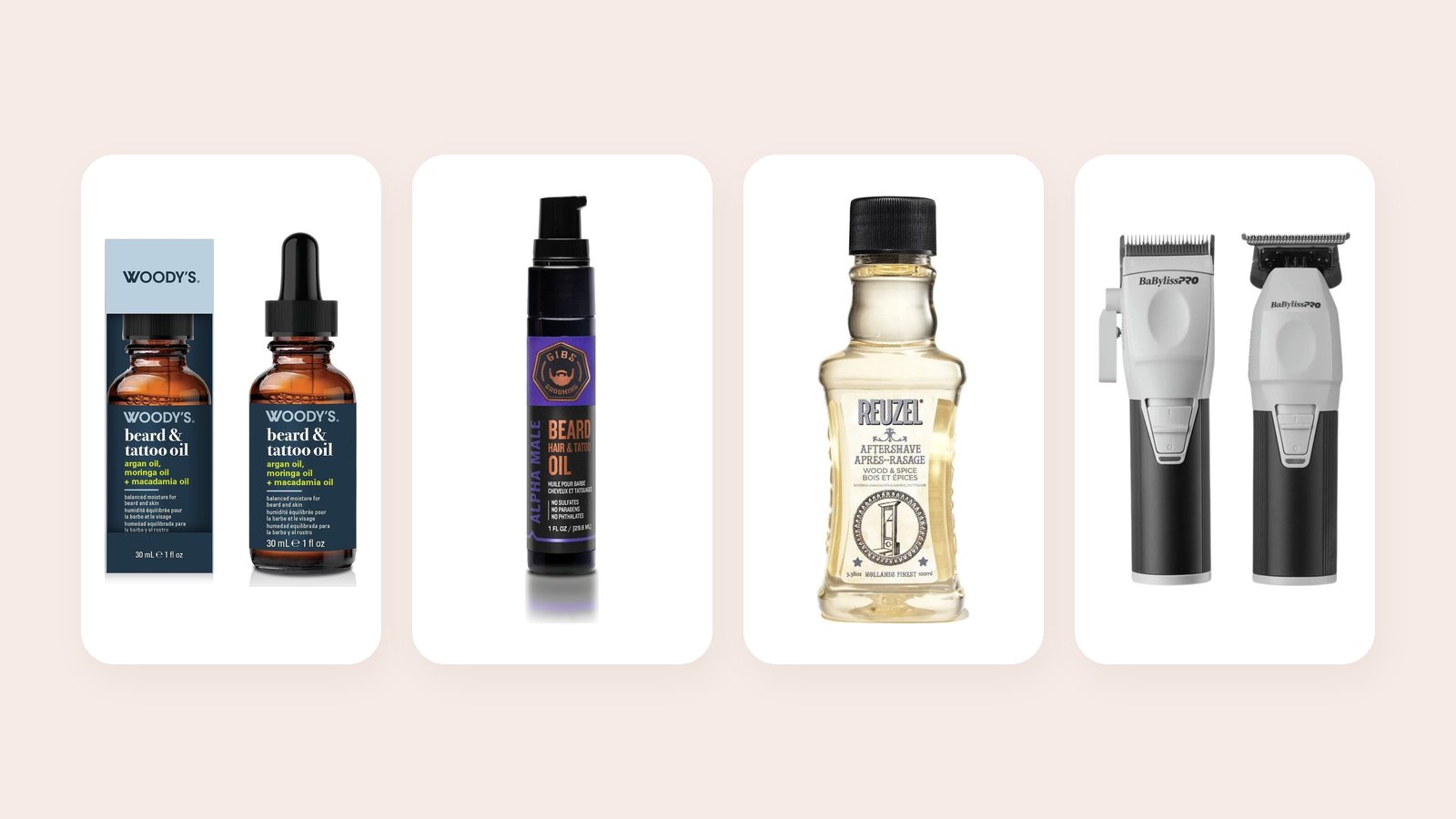
- Woody’s Beard & Tattoo Oil: Woody’s says it’s made with argan, moringa and macadamia oils.
- GIBS Beard, Hair & Tattoo Oil (Alpha Male): one oil labeled for beard, hair and tattoos.
- GIBS Amber Conditioning Fuel: a conditioner for beard and hair.
- Reuzel Wood & Spice Aftershave: an aftershave from Reuzel. Patch test it first, as you would any new product.
- BaBylissPRO COREFX Clipper & Trimmer Combo Set: a cordless clipper and trimmer with stainless steel blades and USB-C charging.
Call or text (949) 591-5304 with your list and we will confirm stock and pricing, then pick up at our Westminster store.
Related reading: how to clean a hairbrush and comb, the 48-hour hair dye patch test and TSA rules for beauty products and hair tools.
FAQ
How often should you wash your beard?
Every day, the AAD says, with a gentle cleanser rather than soap. For breakouts under the beard, it suggests washing twice a day with an acne cleanser.
Is beard oil good for your beard?
It’s one way to moisturize. The AAD suggests beard oil for normal to dry skin, but beard conditioner instead if you’re prone to acne.
Why does my beard itch when it’s growing in?
The AAD points to dry skin and to ingrown hairs in the stubble phase. Wash and moisturize daily, and see a dermatologist if a rash or bumps don’t clear.
Should you shave with or against the grain?
With the grain. The AAD says shaving against the grain causes irritation and can lead to ingrown hairs.
How do you clean beard clippers?
Brush out loose hair after every use and oil the blades as your manual directs. California salons must also disinfect clippers before each use.
Sources
- American Academy of Dermatology: A dermatologist’s top tips for a healthy beard (2021), DIY treatment for 5 common beard problems (2020) and Seborrheic dermatitis: Self-care (2022)
- American Academy of Dermatology: Razor bump remedies for men with darker skin tones (2022), 6 razor bump prevention tips (2022), Hair removal: How to shave and Skin care tips for men
- American Academy of Dermatology: How to test skin care products (2021), Contact dermatitis causes, Ringworm: Who gets and causes and Ringworm: Signs and symptoms
- Mayo Clinic: Ingrown hair: Symptoms and causes and Ingrown hair: Diagnosis and treatment (2024)
- BaBylissPRO, FXX3T Cord/Cordless Trimmer operating instructions (PDF)
- California Board of Barbering and Cosmetology, Article 12, Health and Safety (16 CCR § 980); Shen JJR et al., Dermatophyte contamination of hair clippers and cleaning brushes in Copenhagen hair salons, J Eur Acad Dermatol Venereol 2026
This is general information, not medical advice. Follow the directions on your products and the manual for your clipper or trimmer, and see a dermatologist for razor bumps, rashes or skin changes that don’t clear up.