

Nội dung
ToggleNail Breakage Isn’t Just a Client Problem — It’s a Technician Problem Too
When clients complain that their nails “always break,” “never grow,” or “snap for no reason,” they often assume it’s normal. But as professionals, we know nail breakage isn’t random — it’s structural.
Weak, brittle, or breakage-prone nails create:
Poor adhesion
Inconsistent retention
Difficult shaping
Cracked corners
Peeling at the free edge
Unpredictable wear
More rework time
Lower client satisfaction
At OBB Nails, we approach breakage scientifically. When you understand the true cause of breakage — and apply the correct reinforcement and shaping techniques — you can drastically reduce client complaints and elevate service outcomes.
This guide is built as a technician training resource to help your entire team diagnose, prevent, and correct nail breakage consistently.
1. Nail Breakage: What It Really Means in a Salon Context
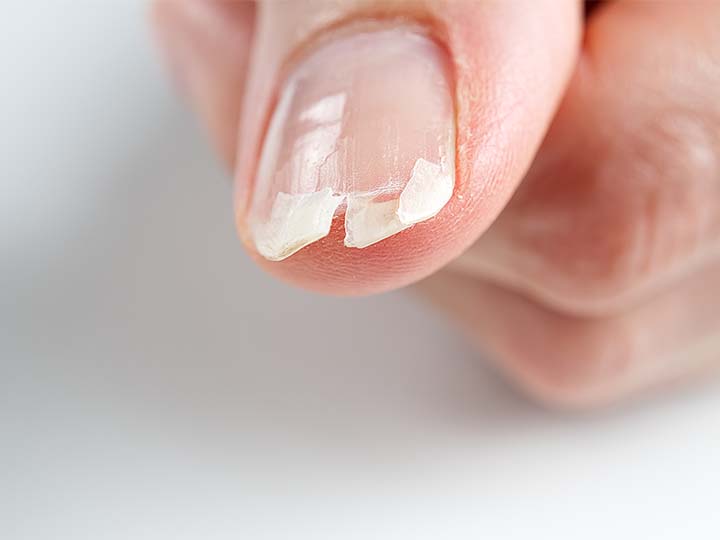
Breakage is a visible sign that the nail’s structural integrity is compromised.
Signs of structurally weak nails:
Snapping at the stress line
Corner cracks
Peeling or delaminating layers
Nails bending backward
Thin, translucent free edge
Sidewall stress fractures
As a technician, your goal is to identify the pattern — because each type of breakage requires a different approach.
2. Technician Breakdown: The 9 Root Causes of Nail Breakage
Below are the most common causes your technicians will encounter — along with the professional fix for each.
2.1 Dryness — the #1 cause of brittle nails
Dry nails lose flexibility and crack under pressure.
Triggers:
Excessive sanitizer
Handwashing
Cold weather
Hard water
Cleaning without gloves
Professional Fix:
- Start every service with hydration education.
- Finish every service with Cuticle Oil and recommend daily use.
- Hydrated nails = resilient nails → fewer breaks.
2.2 Over-buffing or thinning the natural nail
This is one of the most common salon-induced issues.
Caused by:
Aggressive buffing
Incorrect grit
Repeated filing during color changes
Removing too much surface for “smoothness”
Fix:
- Use OBB Buffer
- Buff lightly, never aggressively.
- Protect the nail plate thickness.
2.3 Incorrect shaping that puts pressure on corners
Shape must match nail strength.
Safe shapes for weak or growing nails:
|
Shape |
Strength |
Usage |
|---|---|---|
|
Round |
★★★★★ |
Best for breakage-prone nails |
|
Squoval |
★★★★★ |
Strong, stable, versatile |
|
Oval |
★★★★☆ |
Good for moderate strength |
High-risk shapes:
|
Shape |
Risk Level |
Reason |
|---|---|---|
|
Square |
High |
Sharp corners crack |
|
Almond |
Very High |
Sidewalls collapse |
|
Coffin |
Extreme |
Free edge becomes thin |
Fix:
- Use OBB Pro File and file in one direction only.
- Seal with buffer to prevent splitting.
2.4 Peeling layers weaken the free edge
Delamination = incomplete keratin bonding.
Caused by:
Overwashing
Harsh chemicals
Old polish removal techniques
Vitamin deficiencies
Low hydration
Fix:
- Reinforce with OBB Foundation Base.
- Encourage oil daily.
- Avoid over-buffing.
2.5 The free edge is unprotected
If a nail is not capped properly at each layer, water infiltrates → cracks and lifts.
Fix:
Seal the edge with:
Foundation Base
Color
Top coat every single time.
Free-edge sealing reduces breakage dramatically.
2.6 Pressure-based habits
Most clients don’t realize how often they use nails instead of fingers.
Breakage habits include:
Opening cans
Peeling stickers
Typing with nails
Scratching surfaces
Picking at objects
Lifting lids
Fix:
- Educate clients gently.
- Explain how micro-cracks lead to sudden snaps.
2.7 Excess water exposure
Water expands the nail → then shrinks it.
This cycle creates stress lines.
Fix:
- Recommend gloves for any cleaning task.
- Include this in your client aftercare cards.
2.8 Nails grown too long for their current strength
Growing length requires structure.
Weak nails cannot support long free edges.
Fix:
- Gradually increase length.
- Reinforce with OBB Foundation each visit.
2.9 Poorly matched top coat
A too-hard or too-thick top coat can crack instead of flex.
Fix:
Use:
OBB Crystal Top Coat (high durability)
OBB Matte Top Coat (flexible matte finish)
Thin, even layers = safer wear.
3. Technician Guide: How to Prevent Nail Breakage Step-by-Step
Below is the full OBB professional anti-breakage system.
Step 1: Diagnose the breakage pattern
Sidewall cracks = incorrect shape
Free edge peeling = dehydration
Stress line breaks = thin plate
Vertical cracks = over-filed or over-buffed
Corner breaks = square corners on weak nails
Accurate diagnosis = correct solution.
Step 2: Choose a breakage-safe shape
Round or squoval = most stable for brittle nails.
Use OBB Pro File with gentle pressure.
Finish edges with buffer.
Step 3: Reinforce with OBB Foundation Base
Foundation is the most reliable breakage prevention layer.
Use one of three methods:
A. Standard reinforcement
1 thin coat → cure → color
B. Double-layer reinforcement (for breakage-prone clients)
Layer 1 thin → cure
Layer 2 thin → cure
→ Color application
C. Foundation-only strengthening service
For clients who need rest from gel or polish.
2 layers + top coat.
Step 4: Seal the free edge
Seal = strength.
Seal with:
Base
Color
Top coat
Technique: hold file parallel to the free edge to avoid filing the seal off afterward.
Step 5: Hydrate at every stage
Use Cuticle Oil:
After service
Recommended daily
Massage into matrix for 20–30 seconds
Hydration = flexibility = less breakage.
Step 6: Protect new length
Clients need guidance for daily life.
Advise them to:
Wear gloves for any cleaning
Type with finger pads
Avoid hot water for 12 hours
Not use nails as tools
Avoid picking at polish
Moisturize regularly
Small changes → huge improvements.
Step 7: Provide a maintenance schedule
Consistency reduces breakage.
Client Growth + Breakage Prevention Schedule:
|
Week |
Appointment |
Focus |
|---|---|---|
|
1 |
Reinforcement |
Shape + double foundation |
|
2 |
Check + hydration |
File edges + oil |
|
3 |
Reinforce |
Maintain shape |
|
4 |
Full service |
Assess length |
This schedule dramatically improves retention and breakage prevention.
4. The OBB Anti-Breakage Add-On Service (High-Profit Salon Treatment)
Service Steps (20–25 minutes):
File round/squoval
Light buff (no over-buffing)
Dehydrate with prep solution
Apply double foundation base
Seal free edge
Top coat
Provide aftercare instructions
Why it works:
Adds durable structure
Protects corners
Supports length
Reduces chipping
Reinforces natural growth
Clients notice results within 2–3 weeks.
5. Technician Education: Ensuring Consistent Results Across a Team
Your salon should aim for identical performance across all technicians.
Standardize:
File grit choices
Shaping techniques
Buffing limits
Foundation application
Curing times
Aftercare scripts
Create an internal breakage-prevention checklist:
Assess nail plate
Choose safe shape
Reinforce properly
Seal edges
Hydrate
Protect length
Provide clear aftercare
Consistency = reliability = client trust.
6. The Full OBB Breakage Prevention System
|
OBB Product |
Function |
Technician Benefit |
|---|---|---|
|
Shape safely |
Prevents corner cracks |
|
|
Gentle smoothing |
Protects plate integrity |
|
|
Reinforce |
Prevents breakage |
|
|
Seal & protect |
Chip-resistant shield |
This is the technician-approved system for eliminating breakage.
Prevent Breakage, Improve Retention, Increase Trust
When clients stop experiencing breakage, they:
Grow their nails longer
Trust your advice
Return more often
Spend more on services
Refer friends
Buy more retail
Choose stronger designs
Stay loyal to your salon
Breakage isn’t random — it’s diagnostic.
And with the right professional techniques and OBB’s reinforcement system, breakage becomes something you prevent, not something you fix.
At OBB Nails, we build systems that help technicians deliver consistent, durable, and beautiful results every time.
Stronger nails = stronger retention = stronger business.