

Nội dung
ToggleThe Small Tool That Defines Professional Precision
Every nail service begins and ends with one simple tool — the nail file. It’s in every technician’s kit, used in nearly every service, and yet, it’s also one of the most misunderstood tools in the salon.
To the untrained eye, all nail files look the same. But for professionals, the right file determines not just nail shape — it determines comfort, efficiency, and long-term nail health for every client.
At OBB Nails, we’ve seen that salons with consistent filing standards produce smoother finishes, longer-lasting results, and fewer client complaints. Here’s how to select, maintain, and use the correct nail file for any service, nail type, or finish — efficiently and safely.
1. Why Nail Filing Is a Technical Process
Nail filing isn’t about force — it’s about control. It’s the step that balances both aesthetics and protection. Proper filing prevents nail edge fractures, defines the desired silhouette, and prepares the nail for product adhesion.
In professional service, filing achieves three things:
Shapes the edge and reinforces structure.
Removes imperfections to prevent lifting or cracking.
Prepares the surface for smooth product application.
|
Stage |
Goal |
Recommended Tool |
Common Mistake |
|---|---|---|---|
|
Shaping |
Define and balance edges |
Medium grit file |
Using rough grit on natural nails |
|
Smoothing |
Refine edges and eliminate burrs |
Fine grit file |
Filing back and forth |
|
Finishing |
Seal the edge to prevent splitting |
240+ grit |
Skipping final sealing step |
Filing correctly ensures that each nail — natural or artificial — maintains structural integrity during and after the service.
2. Understanding Grit: Your Most Important Decision
The grit rating is what separates a professional file from a generic one. Lower numbers = coarser grit. Higher numbers = smoother finish.
|
Grit Level |
Texture |
Professional Use |
Nail Type |
|---|---|---|---|
|
80–100 |
Very coarse |
Acrylic or gel shaping |
Artificial enhancements only |
|
150–180 |
Medium coarse |
Free edge shaping |
Hard natural nails |
|
180–240 |
Fine |
Refining and smoothing |
Most natural nails |
|
240–400 |
Extra fine |
Finishing and sealing |
Soft or thin nails |
|
400–600+ |
Ultra-fine |
Surface polishing |
Natural shine services |
Professional Rule of Thumb:
For natural nails, never use below 180 grit.
For artificial nails, 100–150 grit is standard.
Always end with fine-grit sealing to prevent micro-fractures.
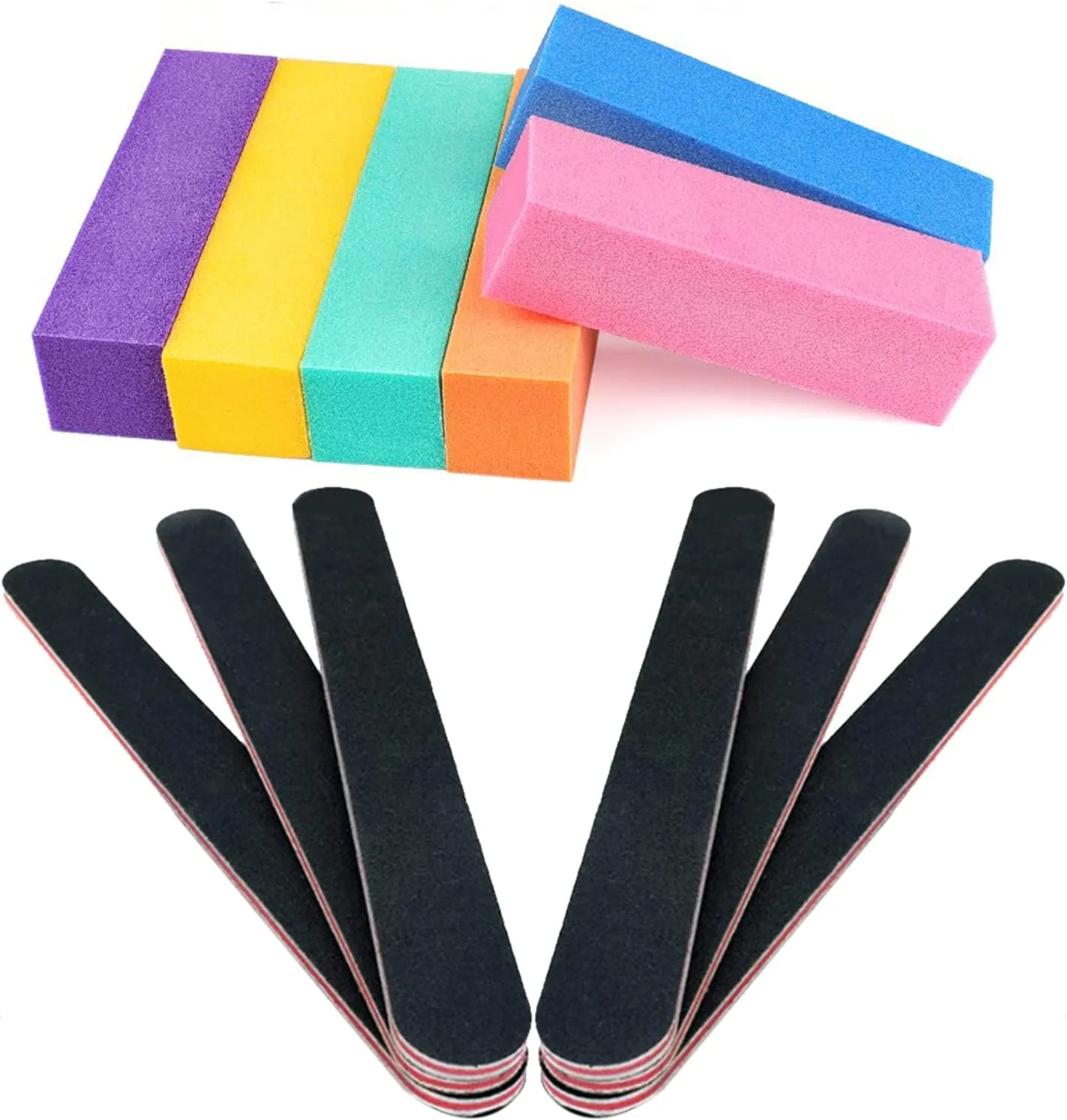
OBB Pro File Series provides dual-grit options for flexible use (e.g., 180/240 or 150/220) — giving technicians speed and precision in one tool.
3. Choosing the Right File for Each Service
Each service type demands a specific file texture and flexibility. Using one file for every step is inefficient and risks over-filing.
|
Service Type |
Ideal Grit |
Recommended File Type |
Professional Reason |
|---|---|---|---|
|
Natural nail shaping |
180–240 |
Foam or cushioned file |
Gentle, precise edge control |
|
Acrylic / Gel removal |
80–150 |
Rigid emery or zebra file |
Faster product removal |
|
Refill / Rebalance |
150–180 |
Half-moon file |
Reaches sidewalls easily |
|
Finish & sealing |
240–400 |
Fine grit file |
Smooths edge for polish |
|
Natural shine (no polish) |
400+ |
Glass or crystal file |
Hygienic, glossy finish |
Pro tip: For clients with thin or peeling nails, skip coarse grits entirely and start from 240 grit to preserve structure.
4. Professional Filing Technique: Step-by-Step
Proper technique reduces service time while increasing precision and safety.
Step 1: Sanitize & Assess
Clean client nails, remove residue, and inspect for damage.
Choose grit based on thickness and desired result.
Step 2: Control the Direction
Always file from one side to the center, then repeat from the other side.
Never “saw” back and forth — it causes edge splitting.
Step 3: Angle and Pressure
Hold the file at a 45-degree angle for shaping.
Use light, even pressure — let the grit do the work.
Step 4: Finish and Seal
Switch to 240+ grit to seal the free edge.
Buff gently if needed for high-smoothness services.
|
Step |
Tool |
Key Technique |
Result |
|---|---|---|---|
|
1 |
Medium grit file |
File side-to-center |
Balanced, even shape |
|
2 |
Fine grit file |
Seal the tip |
Smooth edge, reduced splitting |
|
3 |
Buffer |
Surface refine |
Ready for base coat |
|
4 |
Cuticle oil |
Moisturize |
Protects and restores hydration |
Efficiency target: 3–5 minutes per hand for standard shaping, with consistent results across technicians.
5. Common Mistakes That Cause Nail Damage
|
Mistake |
Why It’s Harmful |
Professional Correction |
|---|---|---|
|
Using coarse grit on natural nails |
Removes keratin layers |
Use 180–240 grit instead |
|
Filing back and forth rapidly |
Creates micro-fractures |
File in one direction |
|
Applying too much pressure |
Thins nail edge |
Glide gently, steady motion |
|
Ignoring grit compatibility |
Causes adhesion issues |
Match grit to service type |
|
Not sealing edge |
Leads to peeling |
Always finish with fine grit |
|
Filing after product application |
Breaks polish seal |
File before foundation base |
Training Insight:
The goal of filing isn’t to remove — it’s to refine. Over-filing is a top reason clients experience chronic nail weakness after repeated salon visits.
6. Nail Shapes and How to File Them Efficiently
Each nail shape changes the direction of filing and the visual balance of the client’s hands.
|
Shape |
Description |
Filing Technique |
Client Preference |
|---|---|---|---|
|
Round |
Soft curve, low maintenance |
Follow natural edge |
Active clients |
|
Square |
Flat tip, clean edges |
Straight motion, seal corners |
Classic manicure |
|
Squoval |
Hybrid of square + oval |
File straight, then round slightly |
Most common salon choice |
|
Almond |
Tapered to soft point |
Symmetrical strokes from side to tip |
Elegant, elongating look |
|
Coffin |
Flat tip, long nail |
Even pressure, maintain symmetry |
Trendy long-nail sets |
|
Stiletto |
Sharp tip |
Precision filing on both sides |
Advanced, artistic designs |
Pro tip: Use half-moon or curved-edge files for better accuracy when shaping almond or coffin styles.
7. Maintaining Hygiene and Quality in Tools
Hygiene and consistency are non-negotiable in professional salons. Proper file maintenance protects both clients and technicians.
OBB Salon Hygiene Standards:
One file per client (disposable or labeled).
Clean with alcohol or disinfectant spray between services.
Air-dry completely before reuse.
Replace every 2–3 weeks in high-traffic salons.
Store in sealed containers to prevent cross-contamination.
|
File Type |
Lifespan (Professional Use) |
Sanitization Method |
|---|---|---|
|
Foam File |
2–3 weeks |
Alcohol spray + dry |
|
Glass File |
2–3 months |
Wash, sanitize, dry |
|
Metal Core |
3–6 months |
Replace abrasive sheet regularly |
Implement a tool rotation system to track replacements and prevent unnoticed wear.
8. Product Focus: The OBB Pro File System
|
Product |
Grit |
Design |
Best For |
Key Advantage |
|---|---|---|---|---|
|
Zebra Pro File (180/240) |
Dual-grit |
Curved half-moon |
Natural nails |
Gentle yet precise shaping |
|
Black Emery Pro File (150/220) |
Dual-grit |
Rigid straight |
Acrylic & gel work |
Fast removal, clean lines |
|
Sponge Flex File (240/400) |
Soft foam |
Flexible core |
Fine sealing |
Reduces friction, ideal for weak nails |
|
Glass Shine File |
Ultra-fine |
Polished glass |
Natural nails |
Washable, eco-friendly, long-lasting |
Each file in the OBB Pro System is designed for high performance and technician comfort — lightweight, balanced, and durable under frequent sanitation.
9. Training Technicians for Consistency
Uniform filing technique across your team reduces service variation and improves brand reputation.
Training checklist:
Standardize grit selection per service type.
Demonstrate pressure control during onboarding.
Conduct monthly tool audits for hygiene and wear.
Include client education in post-service dialogue (“We used a 240-grit buffer for your nail type to prevent damage”).
Consistency builds confidence — in your technicians, your clients, and your brand.
10. Efficiency Tips for High-Volume Salons
Keep files organized by grit category and service type for faster selection.
Pre-label file sets for each technician.
Use dual-grit files to reduce tool switching time.
Encourage technicians to replace tools early — a dull file slows work and increases strain.
Offer take-home kits with disposable files for client aftercare (builds retail revenue).
OBB’s professional kits combine multi-grit files and buffers in one package — ideal for busy salons balancing quality and efficiency.
Precision Builds Reputation
A perfect manicure isn’t just about polish — it’s about precision. The nail file may be the smallest tool on your table, but it’s one of the most powerful in shaping results, efficiency, and client trust.
When you choose the right file, apply the correct technique, and maintain professional hygiene, every nail becomes a reflection of your expertise.
At OBB Nails, we design every file for professionals who care about both performance and protection — durable, ergonomic, and salon-tested.
Because in this business, it’s not just what you file — it’s how you finish.


